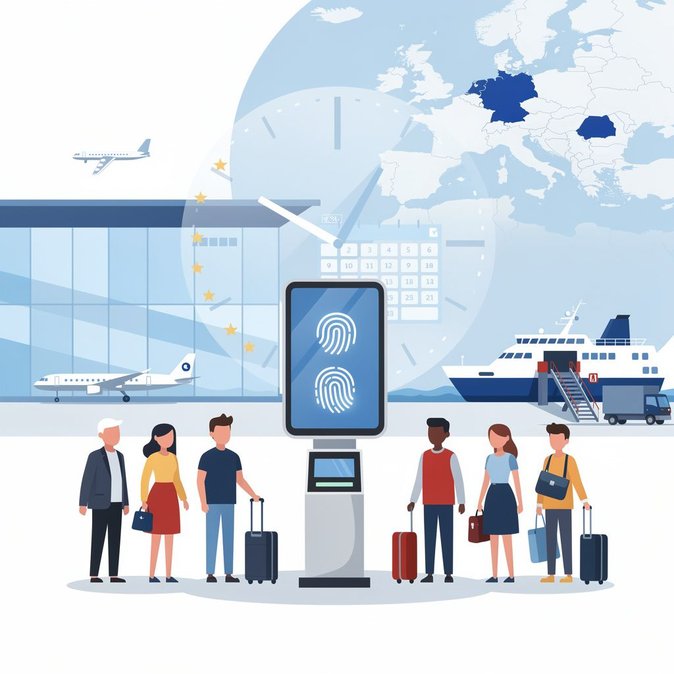
France was due to complete deployment of the EU’s new Entry/Exit System (EES) on 6 September, but Paris – along with eight other member-states – has now secured informal approval from Brussels to keep using ‘grace-period’ flexibilities that let border officers waive biometric capture when queues threaten to snarl traffic. The concession, confirmed on 14 September, acknowledges the practical difficulties of installing hundreds of self-service kiosks at the country’s busiest air, sea and rail gateways before the late-summer peak. Airports such as Paris-Charles-de-Gaulle and Orly have struggled to integrate the new hardware into cramped departure halls, while the operator of the Port of Calais warned it still lacks the space to separate car and coach flows for fingerprinting. Under the deal, France may continue using manual passport stamping and simplified e-gates provided it feeds traveller data into EES retrospectively and reports weekly on progress. Business-travel associations welcomed the breathing space, noting that missed connections at CDG had already cost firms millions in re-ticketing fees during pilot trials. However, they also urged employers to brief staff that spot biometric checks are still possible and can add 15-20 minutes to clearance times. For mobility managers the key takeaway is that the real change has been deferred, not cancelled. Companies moving assignees or frequent flyers through French borders should keep EES compliance on their check-lists (maximum 90/180-day Schengen stay calculation will soon be automated) and ensure passports remain in pristine condition – damaged chips are a leading cause of kiosk failure. The Commission has said it will revisit the situation in November, and a hard deadline in early 2027 cannot be ruled out.
Source: The Guardian / Biometric Update