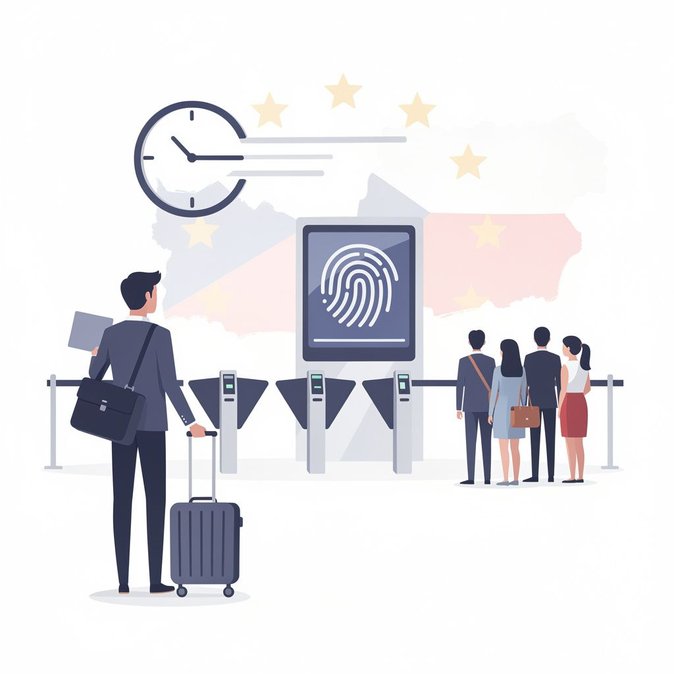
The UK Foreign, Commonwealth & Development Office (FCDO) quietly refreshed its travel advice for Czechia on 17 September, but the change carries big operational consequences for firms that shuttle staff between Britain and Prague. The update centres on the European Entry/Exit System (EES), the EU’s biometric border database that replaced passport-stamping for most third-country nationals in April 2026. According to the new guidance, UK passport holders visiting for business or tourism may be asked to register fingerprints and a facial image on arrival, a process that “can add significant time at the border.” The FCDO explicitly recommends allowing extra time to reach departure gates when leaving Czechia, because exit checks may also involve biometric capture. The advice mirrors real-world reports from travellers who have waited 45–90 minutes at Prague’s Terminal 1 during peak evening waves. The document reiterates that Britons can still spend up to 90 days in any 180-day period visa-free, but reminds employers that work assignments beyond meetings require the appropriate Czech work permit. It also flags that travellers may need to show proof of onward travel and sufficient funds—requirements that Czech police have been enforcing more strictly since EES went live. Why does a routine travel-advisory tweak matter? For mobility managers, it is a government-endorsed signal that EES teething problems are far from over. Organisations running tight itineraries for conferences or client visits should pad schedules, pre-book airport transfers with wait-time contingencies, and brief employees on kiosk procedures to avoid failed scans. The update also hints at what to expect once the EU’s next layer—the ETIAS travel authorisation—comes online in late 2026: more digital paperwork and the need for early planning. The FCDO says it will continue to monitor implementation and publish further updates as EU border-management technology evolves. Companies with frequent intra-EU travel programmes should subscribe to automatic alerts and review policy documents to keep compliance—and employee experience—on track.
Source: GOV.UK – Foreign Travel Advice