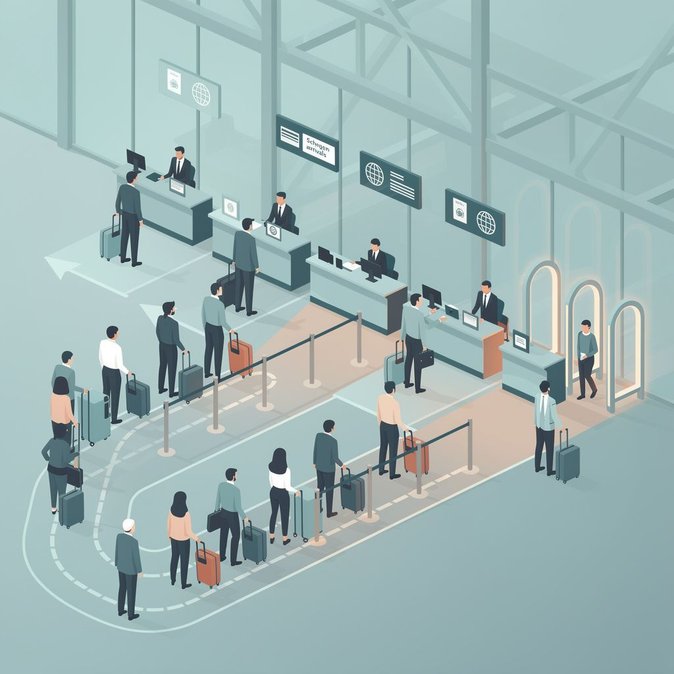
Long lines at Václav Havel Airport Prague have become a daily headache for arriving travellers from outside the Schengen Area since the EU’s new Entry/Exit System (EES) went live in April. After images of hundred-metre queues spread across social media this week, the airport’s newly-appointed chairman Radomír Lašák convened an extraordinary board meeting on 18 September. The board approved an emergency package that combines quick operational fixes with medium-term infrastructure upgrades. Effective immediately, passenger corridors in Terminal 1 are being re-routed to prevent bottlenecks at the first EES registration kiosks. Additional “Red-Team” staff have been deployed to steer passengers, prioritise families and seniors, and distribute bottled water when waits exceed 30 minutes. The airport is also installing multilingual LCD screens that apologise for delays and give real-time guidance on completing biometric registration. In partnership with the Alien Police, a temporary fourth border-control island will open next week, adding five staffed booths and four automated e-gates. The police are adjusting rosters so that the maximum number of officers is on duty during the evening peak, when up to eight non-Schengen flights can land within 40 minutes. Data analysis shows that nearly 40 % of first-time third-country visitors fail to finish kiosk enrolment correctly, forcing manual intervention and slowing the line. A joint task-force will therefore map every step from kiosk to booth and redesign signage so that common errors—such as placing a passport upside-down—are caught early. Medium-term, the airport confirmed a €14 million expansion of the arrivals border-control hall, scheduled for completion by April 2027. Capacity will rise from 12 to 17 traditional desks and from 9 to 13 EasyGo self-service gates, while a pilot for voluntary pre-registration in the airline check-in process will be tested with selected carriers this winter. For corporate mobility managers the message is clear: advise mobile employees to expect longer clearance times—especially if they have never registered in EES—and to schedule onward meetings accordingly. Carriers with high-yield traffic have already begun lobbying Brussels for a remote-enrolment option that could be built into airline apps. Until then, businesses sending staff to Prague should factor an extra 45 minutes into post-arrival transfers and consider Fast-Track or VIP services when timing is critical.
Source: iDNES.cz