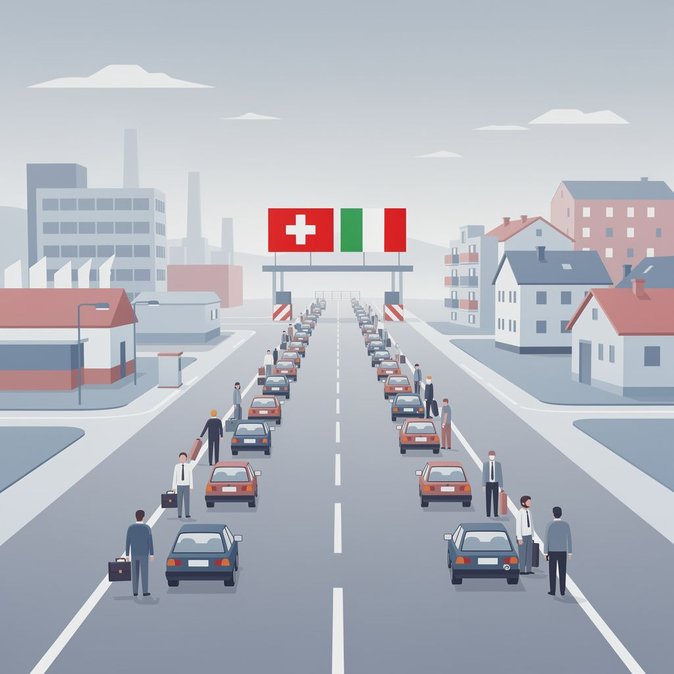
Italian-language daily Ticinonline distilled a newly released Federal Council report that models life without Schengen for border regions. Published on 18 September, the study underscores how commuters who cross from Italy’s Lombardy and Piedmont into Ticino—roughly 75,000 people daily—would face systematic identity checks and multi-hour queues at choke-points such as Chiasso, Stabio and Ponte Tresa. Longer waits would not just inconvenience individuals; they would erode the competitiveness of companies that depend on ‘frontalieri’ for specialised skills in finance, precision engineering and life-sciences. The report warns that persistent congestion could drive businesses to relocate production to Italy or further afield, undermining Switzerland’s appeal as a hub for regional headquarters. Logistics chains are also in the firing line. Around 60 % of Ticino’s imports arrive by road from Italy and France. Mandatory stops for every truck would shatter just-in-time delivery models, increase inventory costs and raise carbon emissions as engines idle at the frontier. Political analysts view the publication as part of the government’s strategy to inform voters ahead of any referendum on the Border-Protection Initiative. For HR and mobility teams the message is unambiguous: losing Schengen would introduce unpredictable friction at borders, complicate posted-worker notifications and add a new layer of paperwork for routine business travel. Companies with large front-runner commuter populations should begin mapping alternative staffing scenarios, including local hiring or expanded remote-work policies, should a Schengen exit materialise.
Source: Ticinonline