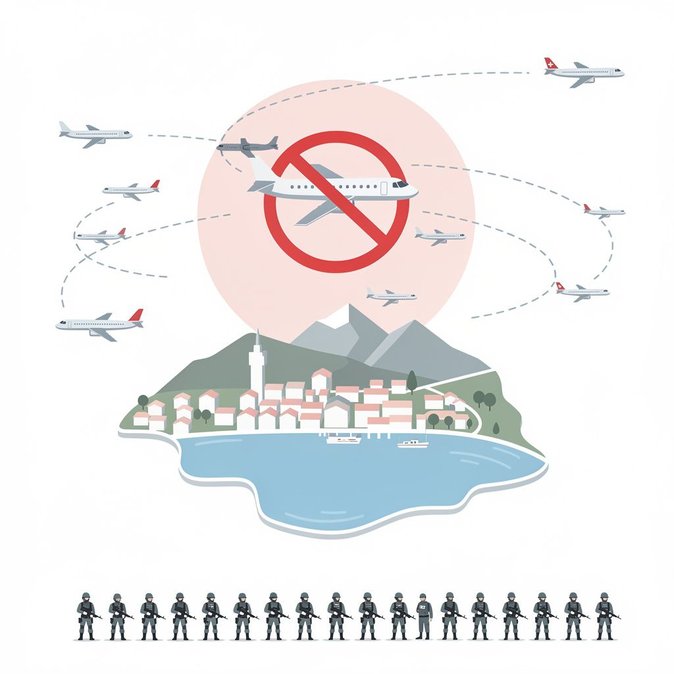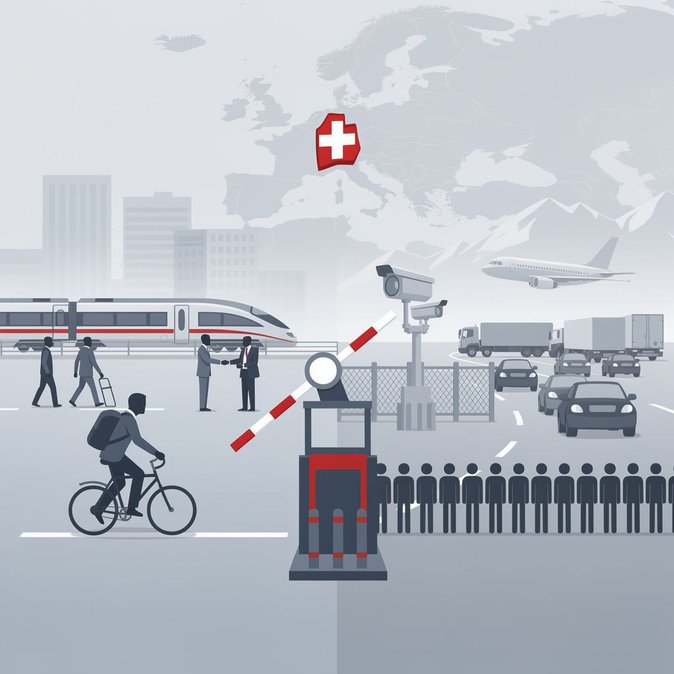
In a major decision that will shape Switzerland’s immigration debate in the run-up to next year’s federal referendum cycle, the Federal Council on 18 September 2026 recommended that Parliament put the popular initiative "Asylmissbrauch stoppen! (Grenzschutzinitiative)" to a nationwide vote – but urge voters to reject it. The initiative, launched by members of the Swiss People’s Party (SVP), would mandate systematic controls at every Swiss border crossing, cap annual asylum grants at 5,000 and withdraw social-security coverage from all irregular migrants. The government argues that the measure is neither practical nor compatible with Switzerland’s international obligations. A new impact study estimates that re-introducing permanent border checks would cause traffic jams affecting 2.2 million daily crossings, jeopardise CHF 320-810 million in annual tourism revenue and saddle the economy with CHF 5.8-16.1 billion in extra costs – primarily for additional guards and lost productivity among cross-border commuters. From a security standpoint, Bern warns that withdrawing from the Schengen/Dublin area – an almost inevitable consequence of systematic checks – would cut Swiss police off from EU databases that generated 40,000 hits in 2025 alone. That loss would make it harder to spot fugitives, stolen vehicles and potential terrorists. The Council also notes that capping asylum at 5,000 cases would breach the Refugee Convention because each claim still has to be assessed individually. For employers, especially in the healthcare, hospitality and advanced-manufacturing sectors clustered along the French, German and Italian borders, the proposal would be deeply disruptive. Cross-border commuters fill an estimated 330,000 Swiss jobs; a 60 % drop, as projected in one scenario, would amplify skills shortages and pressure wage costs. Multinational firms with regional headquarters in Geneva, Basel and Zurich would face higher mobility-management costs as well as longer lead times for intra-company transfers. The Federal Council’s negative message sets the tone for parliamentary debate this autumn. If lawmakers follow the government’s advice, the initiative will go before voters unaccompanied by a counter-proposal – a clear signal that Bern considers the text economically dangerous and legally untenable. Mobility managers and global-talent teams should monitor the parliamentary schedule closely: even a rejected initiative can raise political pressure for tougher asylum and border measures in the future.
Source: Federal Council press release