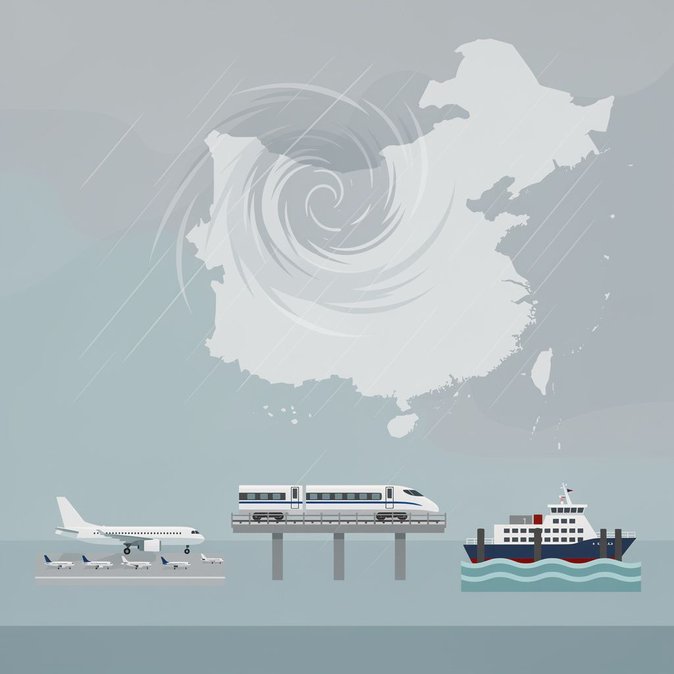
Typhoon Dolphin—the 13th named storm of the western Pacific season—began lashing China’s Zhejiang and Fujian coasts on the evening of 19 September, forcing authorities to cancel more than 300 flights, suspend 55 ferry routes and evacuate almost 100,000 residents from low-lying areas. According to the China Meteorological Administration, Dolphin carried sustained winds of 45 m/s and delivered rain bands of up to 440 mm, triggering red-alert flood warnings. Shanghai Pudong and Hangzhou Xiaoshan airports kept operations running but reported average departure delays of 90 minutes; Xiamen Gaoqi and Fuzhou Changle shut down entirely for several hours. China Railway suspended sections of the coastal Fuzhou–Xiamen and Ningbo–Taizhou high-speed lines as precautionary landslide checks were carried out. Business travellers face knock-on disruption well beyond the landfall zone: air-cargo carriers pre-emptively rerouted freighters through inland hubs, and several Korean and Japanese airlines issued flexible rebooking waivers because the storm’s outer bands are forecast to push into the East China Sea. South Korea’s meteorological service has posted high-wave advisories for Jeju and southeastern ports, potentially affecting Ro-Ro ferry links that form part of regional supply chains. Local governments have activated contingency shelters with bilingual support desks for stranded foreigners—an improvement over past typhoon responses. Still, travel-risk consultants advise multinational companies to use satellite phones or China-Unicom M2M SIM cards to maintain contact should mobile networks fail. Experience from Typhoon Saudel earlier this month suggests that restoring full flight schedules could take 48–72 hours once the storm dissipates. Long term, Dolphin adds to a growing list of extreme-weather events hitting China’s key manufacturing coast. Insurers say repetitive claims may push up premiums for shipment-delay and business-interruption coverage, making proactive route diversification a board-level issue.
Source: Daily Briefing