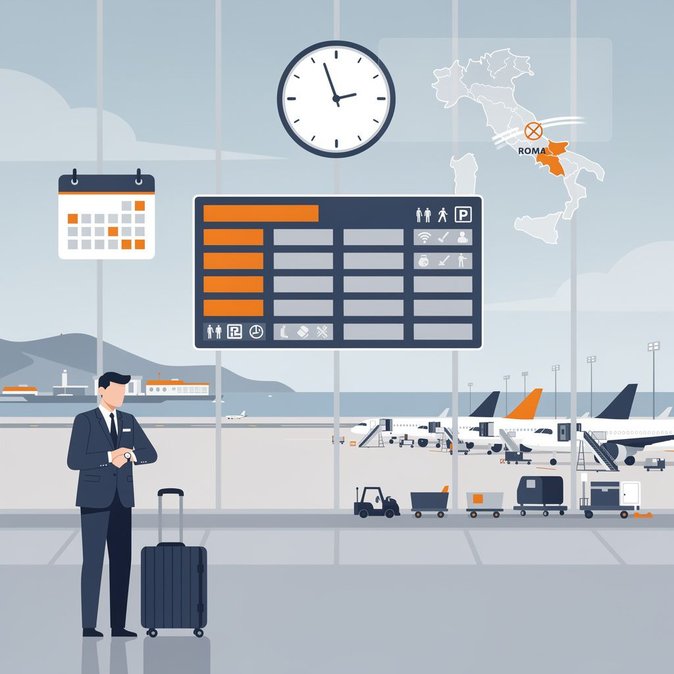
International travellers using Italian airports faced fresh disruption today as ground-handling staff at Cagliari Elmas (Sardinia) continued the month-long overtime ban that has been in force since 6 September. According to the official strike register of the Ministry of Infrastructure and Transport, the walk-out was called by the FILT-CGIL, FIT-CISL and UILTRASPORTI unions and covers “all extraordinary and supplementary work” performed by Sogaer Group personnel until 23:59 on 30 September. The action entered a critical phase this morning, forcing carriers to cancel or reschedule several Cagliari-bound rotations from Rome-Fiumicino and Milan, with knock-on effects on aircraft and crew positioning. Although the dispute is local, Rome-Fiumicino operator Aeroporti di Roma warned passengers that delays could propagate across the network because Sardinia is served almost exclusively by point-to-point flights that rely on tight turnaround times. Business travellers connecting in Rome were advised to monitor airline apps and EU261 notices in case of cancellations. ITA Airways withdrew at least three departures to Cagliari before 07:00, while Ryanair cancelled FR 167 to Paris-Beauvais, illustrating how crew-duty limits ripple beyond the island. The overtime ban coincides with a heavy late-summer leisure demand and the final week of the European Parliament’s plenary session in nearby Strasbourg, increasing pressure on carriers to find spare capacity. Employers and unions remain at odds over staffing levels and scheduling flexibility introduced after pandemic-era layoffs. A mediation meeting at the Prefecture of Cagliari on 16 September ended without agreement, raising the prospect of an escalation to a 24-hour full strike if talks fail next week. For companies moving staff in or out of Italy, the advice is to book Sardinia legs on a single ticket so that downstream sectors are protected; re-routing through Olbia or Alghero may offer better reliability. Travellers originating outside the EU should keep Schengen connection times generous, as missed onward flights could require re-booking through different external border crossings, triggering fresh entry-checks now that many carriers no longer interline bags domestically.