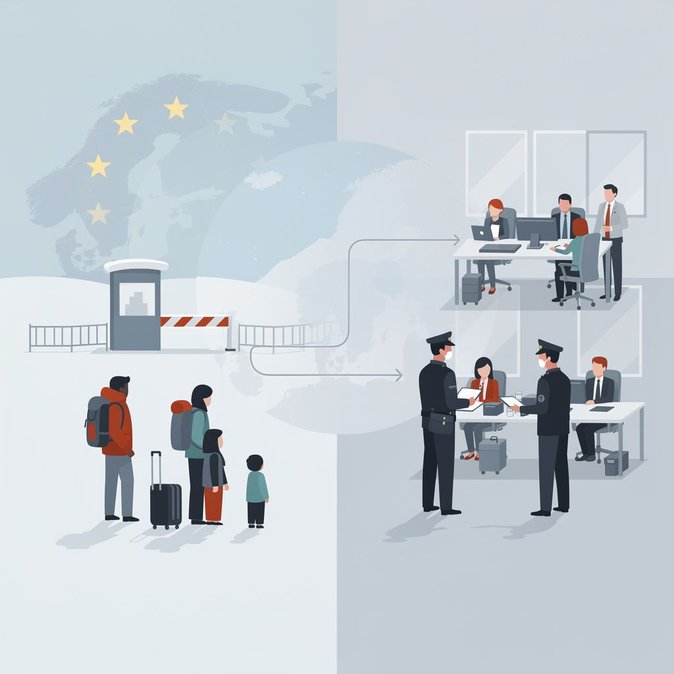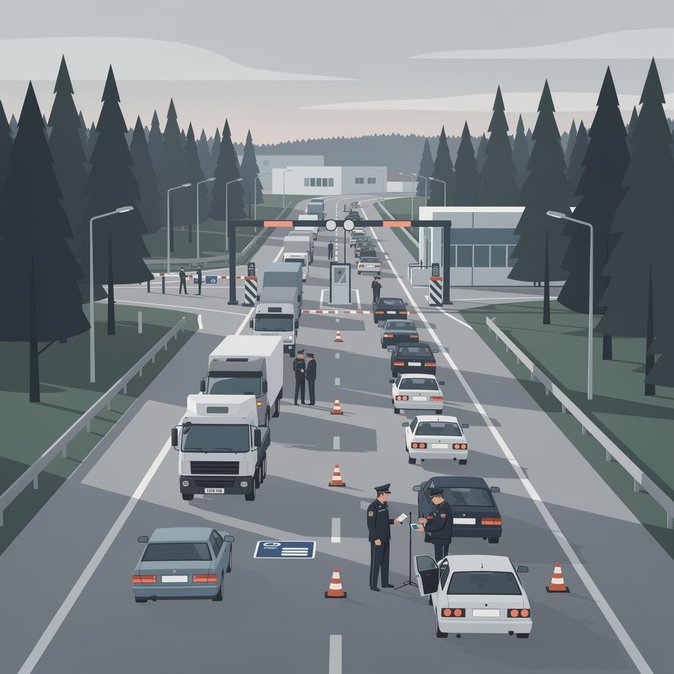
The Finnish Border Guard (Rajavartiolaitos) has revealed that at least 550 people entered Finland illegally from elsewhere in the Schengen Area in 2025, and preliminary figures suggest the 2026 total will be the same or higher. Colonel Matti Pitkäniitty, deputy head of operations, told the Uutissuomalainen news service that most of the clandestine travellers had first slipped across the EU’s external border in southern or eastern Europe and then moved north through the passport-free Schengen zone before reaching Finland. Although Finland’s external land border with Russia has been closed to passenger traffic since December 2023, the internal Schengen frontier at ports, airports and road crossings with Sweden and Norway remains open. Pitkäniitty said organised networks now view the Nordic route as the “easiest corridor” to central and western Europe because spot checks inside Schengen are limited and resources are stretched. “Finland is increasingly a transit country,” he cautioned, adding that many migrants immediately continue south after arriving in Helsinki or Tornio. The Border Guard has asked the Ministry of the Interior for extra funding to step up intelligence-led controls at key entry points, including Helsinki-Vantaa Airport, Turku harbour and the northern road crossing at Kilpisjärvi. The government is also drafting amendments to the Aliens Act that would allow temporary re-introduction of internal border checks when intelligence indicates a surge in secondary movements. Similar measures were applied during the pandemic, but officials stress that any new controls must comply with EU rules on proportionality and free movement. For companies that rely on the smooth passage of staff and cargo across Nordic borders, the prospect of ad-hoc checks is worrying. Logistics operators fear delays for high-value just-in-time shipments coming through Sweden, while multinationals with regional hubs in Helsinki say uncertainty could complicate business travel planning. Employers have been advised to ensure that non-EU employees carry proof of legal residence and work authorisation even on domestic flights, in case spot checks are launched at short notice. The discussion comes as Brussels finalises the Border Management & Visa Instrument (BMVI) for 2028-34, which will channel fresh funds to member states for surveillance technology and reception capacity. Finnish officials hope that part of the new EU money can be earmarked for advanced mobile passport readers and data-sharing platforms to identify overstayers without systematically stopping all travellers. In the meantime, Pitkäniitty urged businesses and travellers alike to “stay alert to changing procedures” during the coming autumn and winter travel peaks.
Source: Verkkouutiset