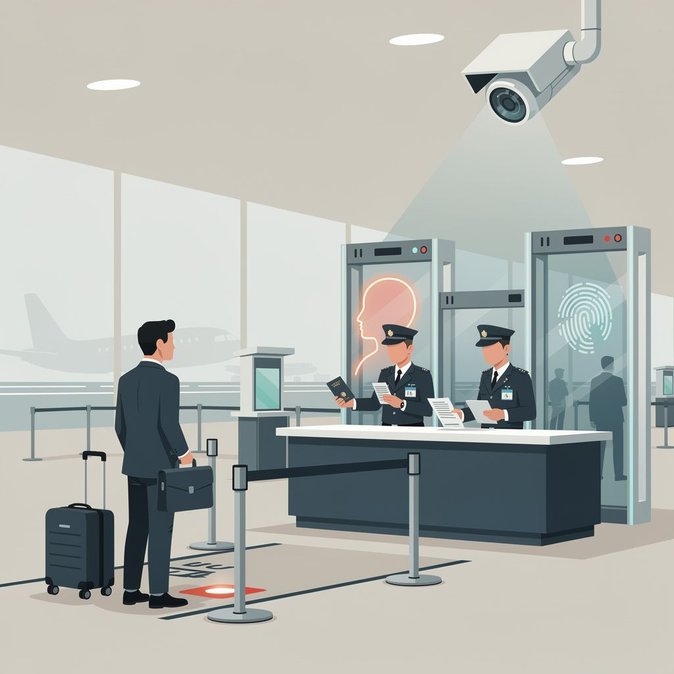
India’s civil aviation and home ministries have moved swiftly to plug holes in the country’s new hub-and-spoke transit model after three Italian nationals flew from Amritsar to Munich on 4 September without clearing departure-immigration at Delhi’s Indira Gandhi International Airport (IGIA). Civil Aviation Minister Ram Mohan Naidu told reporters on 22 September that the government has ‘overhauled the entire international-transfer workflow’, adding extra document checks at the domestic-to-international transfer desk, mandatory barcode scans of electronic boarding passes at Gate 39, and real-time CCTV monitoring of all escorted passengers. Air India, which had through-checked the trio on one PNR, has suspended the ground-handling employee who directed them to the international transfer corridor. The airline has also rewritten its standard-operating procedures: staff must now escort all hub-and-spoke passengers to immigration even if they hold onward boarding passes, and a dual-signature protocol requires both the escort and an Immigration Bureau official to confirm clearance before travellers re-enter the sterile zone. The Ministry of Home Affairs, meanwhile, has issued an advisory to all carriers operating domestic legs that feed onward international flights, warning that further lapses will attract penalties under the Immigration Act 2025, including temporary suspension of transit permissions. Airports Authority of India has instructed IGIA, Mumbai and Bengaluru—the three hubs currently piloting the model—to deploy additional CISF staff at transfer points and to integrate biometric verification with the Fast-Track Immigration–Trusted Traveller Programme (FTI-TTP) e-gates by the December holiday rush. For multinational companies routing assignees and business travellers through India, the incident is a reminder that the hub-and-spoke convenience still sits atop a conventional immigration framework. Until the automated e-gate system is fully operational, travellers connecting via Delhi must expect an extra document inspection and should keep electronic and paper boarding passes handy. Corporate travel managers are advised to update employee briefings and to verify that transit itineraries allow at least three hours at IGIA while the new security overlay beds in.