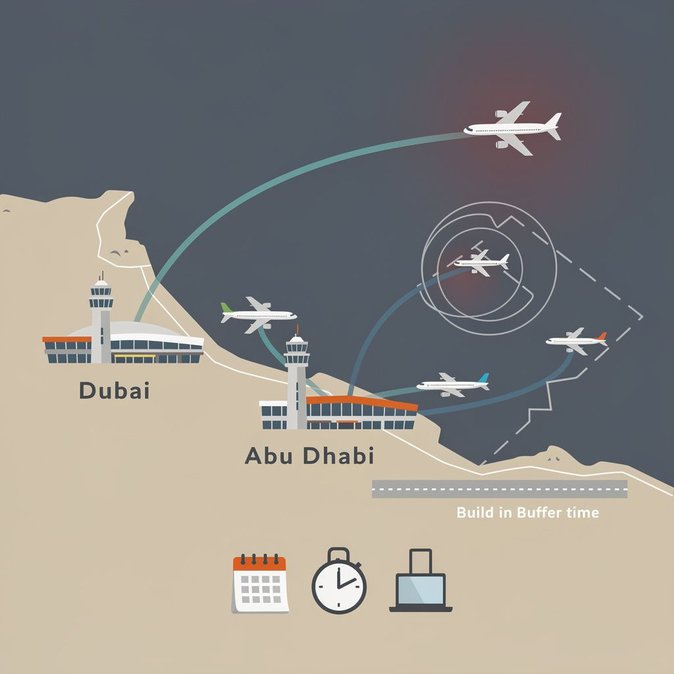
Travellers flying out of the UAE on Friday, September 25 woke up to a long list of disrupted services. Gulf News reports multiple delays at Dubai International (DXB) and Abu Dhabi’s Zayed International (AUH) as airlines tweak routings and crew hours in response to heightened regional security concerns. The picture is mixed: while schedules remain largely intact, individual flights to Manila, Baghdad, Melbourne and several Indian cities were either cancelled or retimed, and Sharjah-based Air Arabia scrubbed more Kuwait and Bahrain services overnight. The operational headaches stem partly from the UAE’s move to bar Iranian carriers, which has shifted traffic flows and ground-handling resources. Air-traffic managers are simultaneously juggling airspace de-confliction measures issued by the EU Aviation Safety Agency and the U.S. Federal Aviation Administration. These advisories warn of potential short-notice closures over Bahrain, Kuwait and the Strait of Hormuz—air corridors that UAE carriers routinely traverse. For business travellers, the practical advice is clear: verify flight status right up until departure, allow extra time at the airport, and keep contact details updated with airlines to receive real-time alerts. Travel managers should review client-meeting schedules and inter-emirate ground transfers—especially for same-day connections—given the risk of rolling delays. Airlines are taking divergent approaches. Emirates is running a full Bahrain and Kuwait schedule but cancelled five long-haul sectors Friday morning, citing “operational constraints.” Etihad listed minor delays but said most flights were operating. Flydubai continues to advise four-hour early arrival at DXB, while Air Arabia’s Kuwait cancellations highlight the fragility facing low-cost point-to-point operators. International carriers remain cautious. Lufthansa, Singapore Airlines and Wizz Air still plan October restarts, but these could slip if advisories tighten. Organisations with expat rotations or critical cargo should diversify routings and consider hub-bypass options such as Muscat or Jeddah until the security calculus improves.
Source: Gulf News