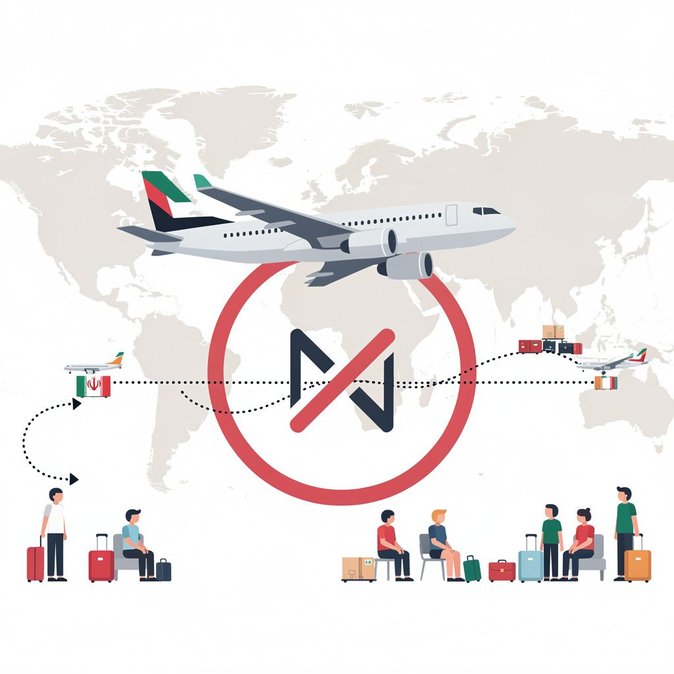
The UAE’s General Civil Aviation Authority (GCAA) has ordered an immediate suspension of all flights operated by Iranian-registered airlines to and from the Emirates. The directive, which took effect on the evening of 24 September, follows a new round of U.S. secondary sanctions that prohibit airports worldwide from providing fuel, ground-handling or ticketing services to carriers linked to Tehran. While the ban is officially described as “temporary”, officials gave no estimate of when services might resume. Industry sources say at least eight daily rotations between Iranian cities and Dubai, Sharjah and Abu Dhabi have been scrubbed, affecting thousands of business travellers, medical tourists and visiting friends-and-relatives (VFR) passengers. Iran’s privately-owned Mahan Air and Caspian Airlines are among the hardest hit; both had built lucrative feeder traffic via Dubai International Airport (DXB). The UAE continues to allow foreign airlines to overfly its airspace on routings that avoid Iran, but carriers face higher fuel burn and potential schedule knock-on effects. Travel-management companies report surging demand for seats on alternative links via Muscat, Doha and Istanbul, while insurance providers are reassessing war-risk premiums for flights transiting the Strait of Hormuz. For multinational employers the immediate priority is employee mobility planning. Companies with project teams commuting between Tehran and the UAE’s free zones are activating remote-work contingencies, while export-oriented firms are moving urgent cargo overland via Oman. Immigration advisers also warn that staff stranded in Iran may overstay UAE residence visas if replacement flights are not arranged within the statutory 180-day limit. The suspension underscores how quickly geopolitical shocks can ripple through corporate travel programmes. Mobility managers are urged to keep traveller profiles updated, track visa expiry dates, and ensure employees have emergency medical cover that remains valid if itineraries are re-routed through third countries.
Source: Gulf News / The National