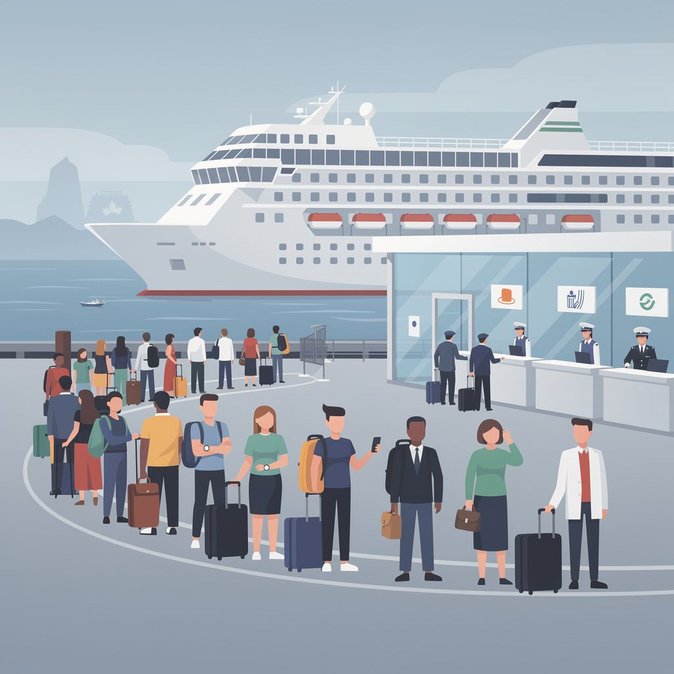
Hundreds of holiday-makers aboard Norwegian Joy discovered the hidden complexity of U.S. immigration law when their repositioning cruise from Vancouver to Los Angeles made a one-day stop in Seattle on 2 October. Because the voyage began in a foreign port, Customs and Border Protection required **face-to-face inspection of every passenger** before anyone could disembark—turning Pier 66 into a scene of snaking queues and missed dinner plans, passengers told travel outlet *The Traveler* on 4 October. Unlike Alaskan ‘closed-loop’ cruises that start and finish in the same U.S. city, repositioning itineraries trigger the full entry-inspection regime at the first U.S. call. Seattle’s cruise terminal, optimised for staggered Alaska turnarounds, struggled with the one-time influx. Business-traveller clients on board reported waiting up to two hours, forcing them to cancel on-shore meetings and undermining confidence in tight post-cruise flight connections. The incident underscores a broader compliance message: cruise lines place ultimate responsibility for documentation on guests, and **mixed-jurisdiction itineraries can activate stricter rules** even for U.S. citizens who might otherwise sail with minimal ID. Travel-risk managers are urging employees to carry passports on any cruise that touches a non-U.S. port, to build buffer time into onward schedules, and to verify visa requirements for non-U.S. staff before booking company events at sea. Port authorities have not announced procedural changes, but local stakeholders say they will review staffing models for next spring’s repositioning season. In the meantime, mobility teams should treat repositioning voyages more like international flights than domestic leisure hops when advising travellers.
Source: The Traveler