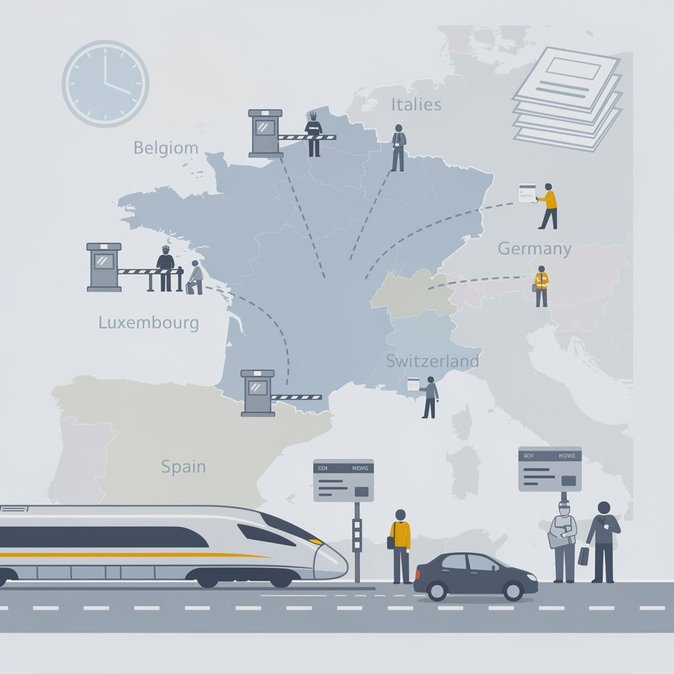
Confusion over Europe’s long-awaited electronic travel authorisation deepened on Thursday evening (15 October) when the European Commission confirmed that ETIAS application portals remain offline and no new launch date has been set. The clarification came after the UK travel trade body ABTA reported more than 150 unofficial websites offering paid ‘pre-registration’ services for ETIAS, despite the system being inactive. For France – the Schengen area’s single most visited destination for visa-exempt nationals – the announcement is critical. Tourism businesses had been gearing up for a late-2026 start date, training staff and rewriting customer communications. That date has now slid, most likely into 2027, because technical problems with the underlying Entry/Exit System (EES) have yet to be resolved. The French Foreign Ministry is urging travellers to rely only on the official EU site once it goes live and reminds visa-exempt visitors that, for now, they only need a valid passport; those who already require a Schengen visa must continue to apply via France-Visas. Corporate mobility managers should update pre-trip briefings immediately. Many multinational assignees scheduled to start French projects in Q4 2026 had been instructed to factor in ETIAS processing time; that step is no longer necessary. Companies should also warn staff about phishing scams: several fake portals invite users to enter passport details and pay fees of up to €79 – four times the €20 fee that will apply once ETIAS finally launches. The delay has legal implications. Airlines remain liable for carrying inadmissible passengers and must continue manual checks on visa requirements country-by-country, instead of relying on an ETIAS database. Employers moving high volumes of talent into France during the Christmas peak should therefore keep contingency funds for on-the-spot ticket changes if passengers are denied boarding for traditional visa issues. Looking ahead, the French Interior Ministry says it will need at least six months’ notice to re-configure border kiosks once a new ETIAS date is set. That means the system is unlikely to go live before the 2027 summer peak. Until then, mobility teams can postpone the budget line they had allocated to ETIAS fees – but should reassign those resources to traveller education and to monitoring the performance of EES, the biometric backbone whose glitches are now the main barrier to ETIAS.
Source: VisaVerge