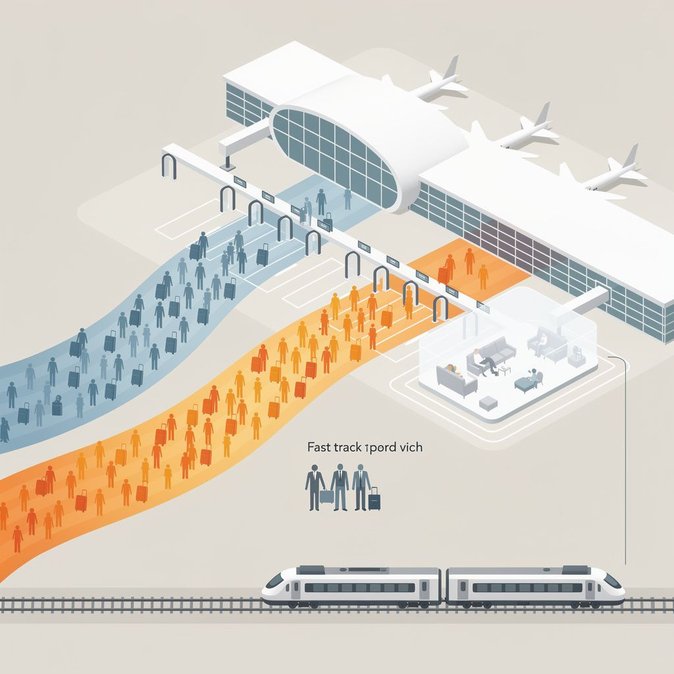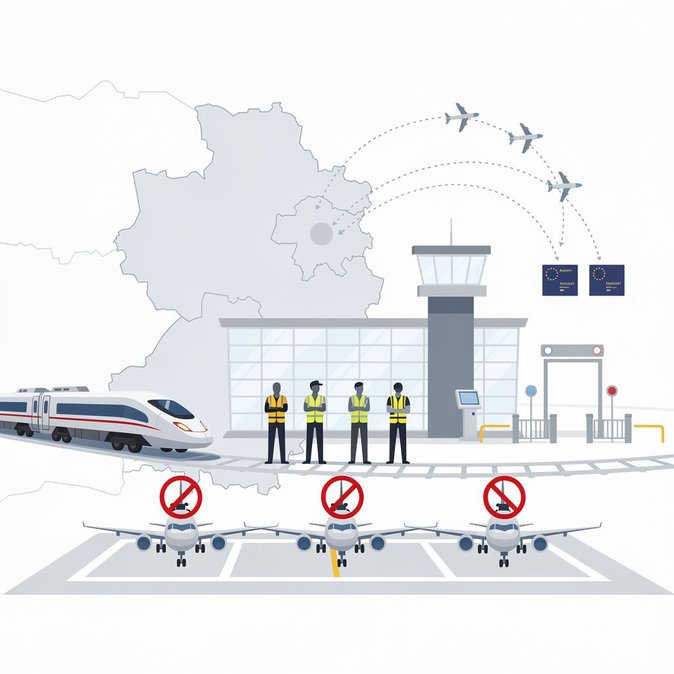
Belgium’s aviation network ground to a complete halt on Monday, 19 October 2026 after the three main trade-union federations (ACV/CSC, ABVV/FGTB and ACLVB/CGSLB) launched a 24-hour strike covering security screening staff, ramp handlers and aircraft-refuelling teams at every commercial airport in the country. With no certified personnel to operate security checkpoints, Brussels Airport Company (BAC) cancelled every one of the day’s 240 scheduled outbound passenger flights from Brussels Airport (BRU). Brussels South Charleroi Airport (CRL) followed suit, closing its terminal doors to departing passengers shortly after 06:00. Regional airports at Liège, Ostend-Bruges and Antwerp suspended almost all passenger services, limiting operations to essential freight and business-aviation movements. The strike is the latest flash-point in a protracted national bargaining dispute over workload pressures and real-wage erosion in Belgium’s outsourced airport-security and ground-handling sector. Unions are demanding an 8 % inflation-catch-up rise, legally enforceable staffing ratios at screening lanes and baggage belts, and a four-day work-week pilot for night-shift personnel. Employers have so far offered 3 % spread over two years and a one-off cost-of-living bonus. Mediation talks collapsed late Sunday, triggering the walk-out. For travellers, the operational impact is unprecedented: all outbound flights were cancelled outright, while inbound rotations faced diversions to Lille, Düsseldorf, Amsterdam and Paris. Eurostar, Thalys and Deutsche Bahn added carriages on routes linking Brussels-Midi with London, Paris, Amsterdam and Cologne, but seats sold out within hours. Travellers were reminded that EU Regulation 261/2004 guarantees a choice between full cash refunds and free re-routing, even when strikes are deemed an “extraordinary circumstance.” Airlines including Brussels Airlines, Ryanair and Lufthansa activated fee-free rebooking waivers for departures through 26 October. The shutdown also exposed continuing bottlenecks in Belgium’s roll-out of the EU Entry/Exit System (EES). Border-police e-gates remained staffed, but the absence of connecting departures meant that thousands of non-EU passengers found themselves stranded air-side with limited luggage-handling capacity. Airport authorities admitted that contingency plans for simultaneous strikes across security and ground-handling functions had never been stress-tested under the new biometric regime. While the strike is scheduled to end at 23:59 Monday, industry insiders warn that the backlog of aircraft, baggage and rebooked passengers could cause knock-on delays well into mid-week. A fresh conciliation meeting is pencilled in for Wednesday; if no compromise emerges, unions have threatened rolling 48-hour actions in the run-up to the busy All-Saints holiday period. Business-travel managers are therefore advising multinational staff to route via Amsterdam Schiphol or Paris CDG until at least Friday and to build extra time into any cross-border assignments originating in Belgium.
Source: Passage Wire