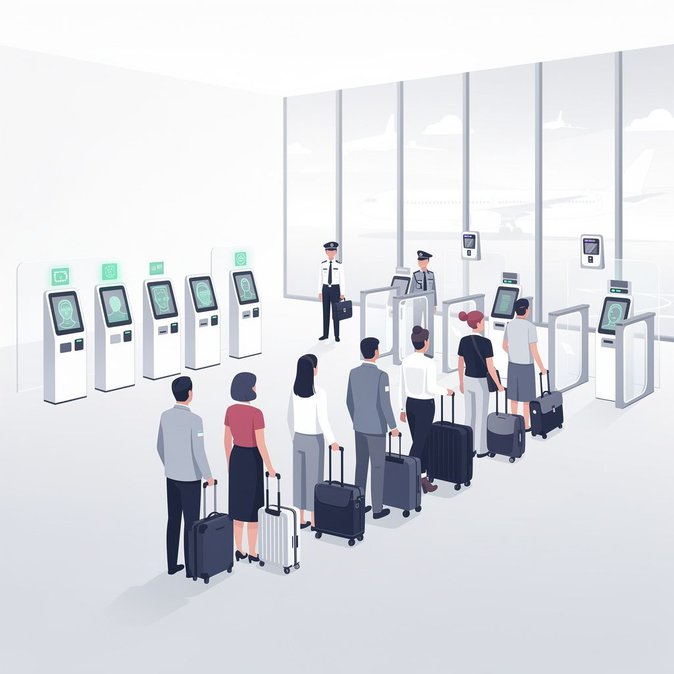
Real-time data on 23 October showed that arriving travellers at Zurich Airport (ZRH) waited an average of just six minutes at passport control, while first-time Entry/Exit System (EES) enrolment took around five minutes— a dramatic improvement on the two-hour lines reported after April’s system crash. The drop follows the installation of eight additional self-service biometric kiosks and the continued use of ‘biometric flex mode’, which allows officers to revert to manual stamping when queue thresholds are exceeded. Switzerland, which has been fully live on EES since April, persuaded the EU Council in May to let it apply flex mode during peak periods, buying time to ramp up infrastructure. FlightQueue’s Swiss EES dashboard now lists both Zurich and Geneva as ‘live’ with average first-entry waits of five to seven minutes, well below the 25-minute threshold many airports set as acceptable. For corporate travel managers, the numbers suggest that the worst of the EES teething problems at Switzerland’s two main hubs may be over— but vigilance is still required. Flight-bank peaks, especially UK morning arrivals, can still stretch resources, and biometric kiosks remain prone to brief outages. Companies should continue advising non-EU assignees to build in extra time before onward rail connections and to carry printed accommodation letters, which officers occasionally request when the system flags an over-stay risk. Zurich’s quick fix stands in contrast to some larger EU airports where kiosk procurement is lagging. The Swiss case demonstrates that capacity upgrades combined with operational flexibility can restore service levels even under the data-heavy EES regime. If ETIAS eventually launches in 2027, as now rumoured, Swiss authorities plan to piggy-back the same IT backbone, meaning the current investment will have long-term value.