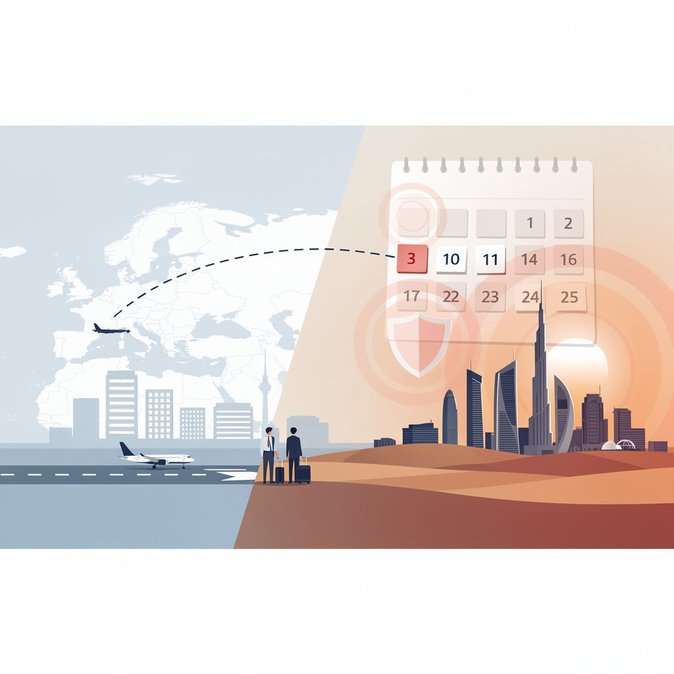
German flag-carrier Lufthansa confirmed on Friday, 23 October 2026, that it will push back the relaunch of its daily Frankfurt-Dubai service from 25 October to 25 November. The airline group, which also owns Swiss and Eurowings, cited the “continuing volatile security situation in the wider Middle-East region” and the need to keep crewing and insurance costs under control. Although Germany’s Federal Foreign Office has not issued a formal travel warning for the United Arab Emirates, Lufthansa told reporters that corporate security advisers had recommended additional risk-monitoring periods before cabin crews undertake overnights in the Gulf. Swiss will likewise defer its planned Zurich-Dubai restart, while Eurowings now targets early December for its low-cost Cologne flight. Affected passengers will be rebooked free of charge or offered refunds; travel-management companies have been advised to review PNRs and inform travellers whose meetings coincide with Dubai’s high-profile Gitex Global technology fair in early November. The delay highlights how geopolitical flashpoints continue to shape German business travel three years after the pandemic. Prior to its suspension in July, the Frankfurt-Dubai flight had one of the highest proportions of corporate and export-cargo revenue in Lufthansa’s long-haul network, serving industries ranging from automotive parts to high-end machinery destined for South Asian markets. Forward bookings had recovered to 92 percent of 2019 levels, according to MIDT data, underscoring pent-up demand. Travel buyers must now juggle complex duty-of-care rules: Germany’s Workplace Safety Act obliges employers to reassess risk classifications when carriers change routings or crew lay-over patterns. Insurance brokers estimate that war-risk premiums for carriers operating over Iranian and Iraqi airspace have risen by up to 40 percent since the Gaza escalation, costs that could flow through to surcharges once flights resume. Analysts at HSBC warn the postponement may shave as much as €8 million off Lufthansa’s fourth-quarter passenger revenue but note the impact will be partially offset by a strong trans-Atlantic market. For mobility managers the episode is a reminder to keep contingency suppliers on file and to communicate Germany’s evolving Reisesicherheitsliste (traveller registration) requirements to expatriate staff. Should the regional security outlook stabilise, Lufthansa says it could ramp back to two daily frequencies by the January trade-show season, but that decision will depend on weekly risk assessments conducted with the Federal Police and reinsurers.
Source: Reuters via MarketScreener