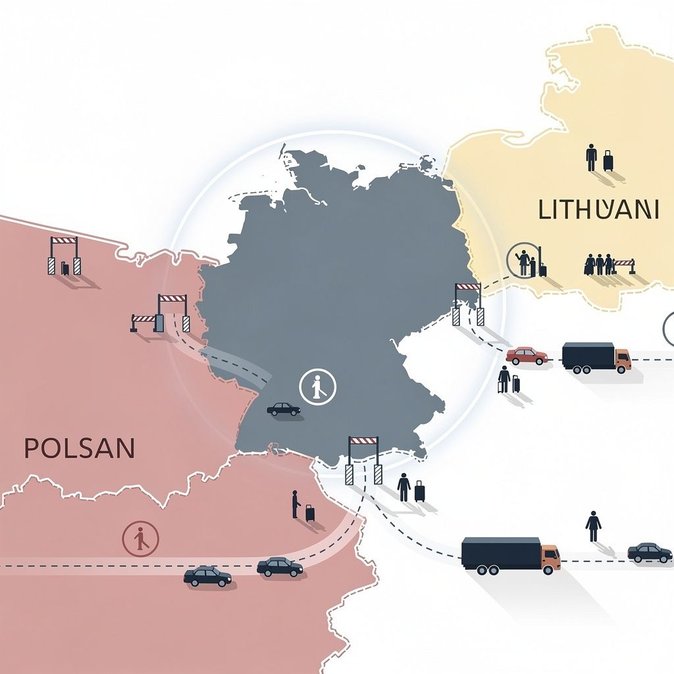
Poland has followed Berlin’s lead by prolonging its own Schengen border controls until 30 March 2027, according to the same European Commission update released on 23 October. Warsaw justifies the measure by pointing to “persistent migratory pressure” along its frontiers with both Germany and Lithuania. Since July 2025, Polish guards have been empowered to stop buses, cars and rail passengers as they cross into Brandenburg, Mecklenburg-Western Pomerania and Saxony. While most travellers are waved through after a brief visual check, the Polish Ministry of the Interior says more than 16,000 attempted irregular entries have been intercepted so far in 2026—three-quarters of them involving forged or borrowed EU ID cards. German logistics firms running east-west supply chains worry about cumulative delays, particularly for just-in-sequence auto-parts deliveries to Brandenburg’s growing EV cluster. Chamber of Commerce representatives from Frankfurt (Oder) are urging both governments to pilot “green lanes” for authorised economic operators to keep trade flowing. Mobility advisers should alert cross-border commuters—especially non-EU nationals working in Berlin’s tech sector but living in western Poland—to carry residence permits and proof of employment. Coach companies running the popular Warsaw–Berlin route have already added 20 minutes to published timetables. The twin German–Polish extensions underscore a wider trend toward long-term internal checks in the Schengen area, raising questions about how quickly Europe can return to passport-free travel even after current security concerns subside.