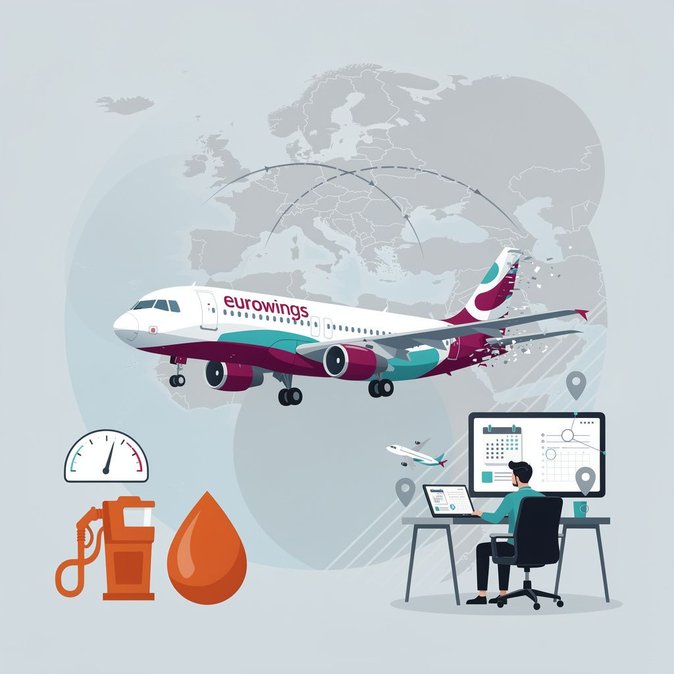
Lufthansa subsidiary Eurowings confirmed on Sunday that it is negotiating a short-time-work (Kurzarbeit) scheme with the Federal Employment Agency and will cut roughly five percent of its winter timetable after kerosene prices surged in the wake of renewed tensions in the Middle East. In a letter to staff seen by The New German, management said unexpected fuel bills would add almost €250 million to 2026 costs, wiping out thin winter margins. The airline will scrap its newly launched Dubai routes from Cologne/Bonn and Stuttgart altogether and trim frequencies on a string of European business routes. Around 100 back-office jobs are to be cut by 2028; cabin-crew staffing levels will depend on how many flights remain in the schedule. Talks with trade-union ver.di over Kurzarbeit top-ups are under way. If approved, the state-supported scheme would let Eurowings temporarily reduce employees’ hours while the Federal Employment Agency covers up to 67 percent of lost net wages, shielding the carrier from permanent lay-offs and preserving operational know-how for the busier summer season. For corporate travel managers the news is a fresh headache: Eurowings is the largest point-to-point carrier within Germany after Lufthansa itself, and its Cologne, Düsseldorf and Stuttgart bases are critical for medium-sized exporters. Companies with winter itineraries—especially to Dubai or niche European cities—should re-check PNRs, build in connection buffers and consider interline alternatives. The episode also underscores the volatility that geopolitical shocks continue to inject into European aviation. Airlines face a double bind of higher fuel costs and looming Entry/Exit System complexity, making proactive supplier risk assessments and flexible ticketing policies an essential part of any mobility programme this winter.
Source: The New German