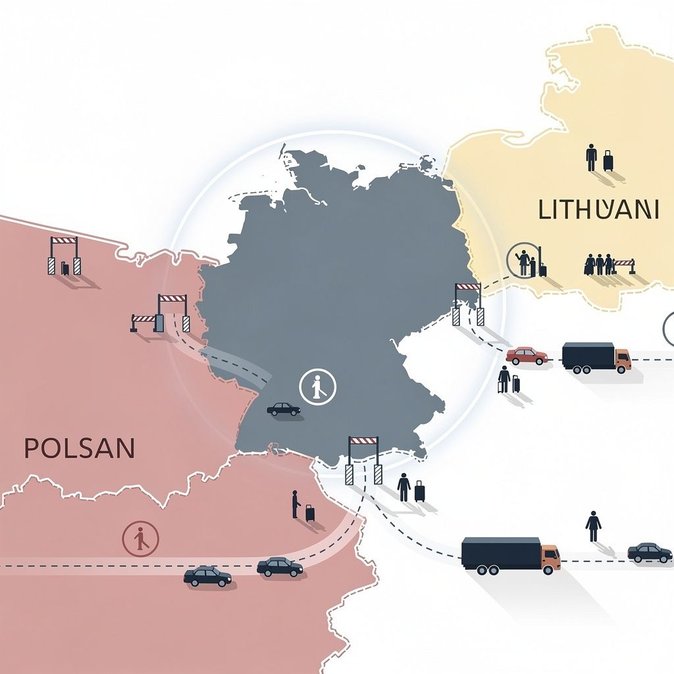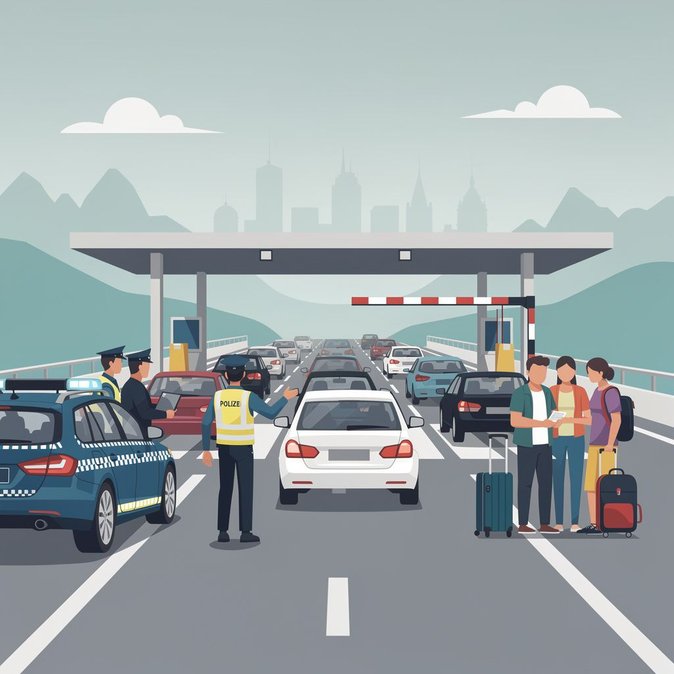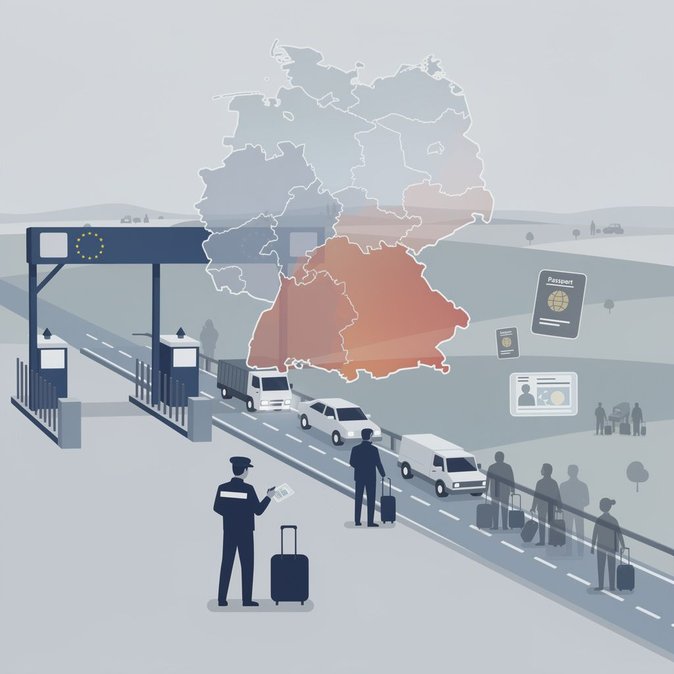
Germany’s Federal Ministry of the Interior has quietly notified the European Commission that the temporary controls at all nine of the country’s land borders will be prolonged for another six-month cycle, running from 16 September 2026 to 15 March 2027. The updated entry on the Commission’s public register of Schengen notifications—published on 23 October—cites “continued serious threats to public security and order” arising from high levels of irregular migration, migrant-smuggling networks and pressure on asylum reception centres. The controls, first re-introduced on selected frontiers during the 2015 refugee crisis and expanded to every land border in September 2024, allow Bundespolizei officers to carry out spot checks on travellers arriving from Austria, Switzerland, France, Luxembourg, Belgium, the Netherlands, Denmark, Czechia and Poland. Although the checks are targeted and risk-based, travellers report queues of up to 45 minutes at peak times on the A3 near Passau and the A4 at Görlitz. Cargo operators say wait times have shortened since digital pre-clearance lanes were rolled out, but warn that just-in-time supply chains remain vulnerable. Business groups such as the Federation of German Industries (BDI) reluctantly accept the extension, noting rising people-smuggling cases but calling for “clear sunset clauses” and more investment in EU external-border technology. Human-rights NGOs, by contrast, argue that long-term internal checks undermine Schengen’s core principle of free movement and should be replaced by joint patrols and intelligence sharing. For corporate mobility managers, the practical advice is clear: inform assignees and frequent business travellers to carry passports or national ID cards even on intra-EU trips; build a buffer of at least 30 minutes for cross-border ground transfers; and remind non-EU national employees that ad-hoc stops may include document and visa-validity inspections. Companies that move goods by road should review contractual delivery windows and consider alternative rail or river routes where feasible. While Brussels can issue opinions on proportionality, the decision ultimately rests with Berlin. With asylum numbers still well above pre-pandemic levels and political pressure from the far-right AfD unabated, few observers expect Germany to fully lift the controls before the European Parliament elections in June 2027.