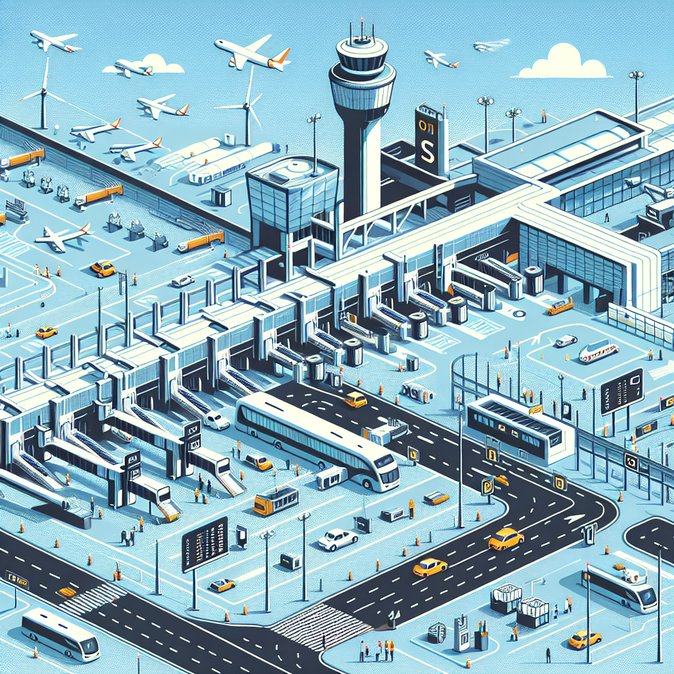
Centralny Port Komunikacyjny (CPK), the green-field airport and multimodal hub planned between Warsaw and Łódź, reached a milestone on 20 February 2026 by closing the pre-qualification phase for a contract to supply, install and maintain 92 passenger boarding bridges. Six international consortia—from Sweden’s FMT and Spain’s Adelte to a Polish-Singaporean joint venture—submitted dossiers for the deal, valued at roughly €1 billion including options. Five bidders will now enter a competitive dialogue, with final award expected in early 2027. The sheer scale underscores CPK’s ambition: Warsaw Chopin Airport currently operates 27 bridges, while the new facility targets an initial capacity of 44 million passengers and seamless rail-air connectivity. According to CPK’s procurement office, the bridges must be future-proofed for both wide-body aircraft and short-turn low-cost operations, and integrate with automated border-control e-gates that will support the EU Entry/Exit System from day one. For travel-programme managers the announcement signals tangible progress after years of debate over funding and environmental permits. When operational (planned for 2032), CPK is expected to cut intra-European connection times via Poland and create a one-stop long-haul alternative to Frankfurt or Amsterdam—potentially reshaping corporate routing strategies and expatriate assignment packages. Construction timelines remain tight: CPK’s baggage-handling-system contract was signed in November 2025, earthworks for access rail corridors begin this spring, and passenger-terminal ground-breaking is scheduled for Q3 2026. Suppliers facing liquidated-damages clauses for delays are already lobbying for accelerated customs clearance of imported components. Global mobility practitioners should monitor forthcoming tenders for automated border-control gates, immigration counters and crew-processing facilities, as these will determine throughput speeds and the viability of tight layovers for assignees and VIP travellers.
Source: Aviation.Direct