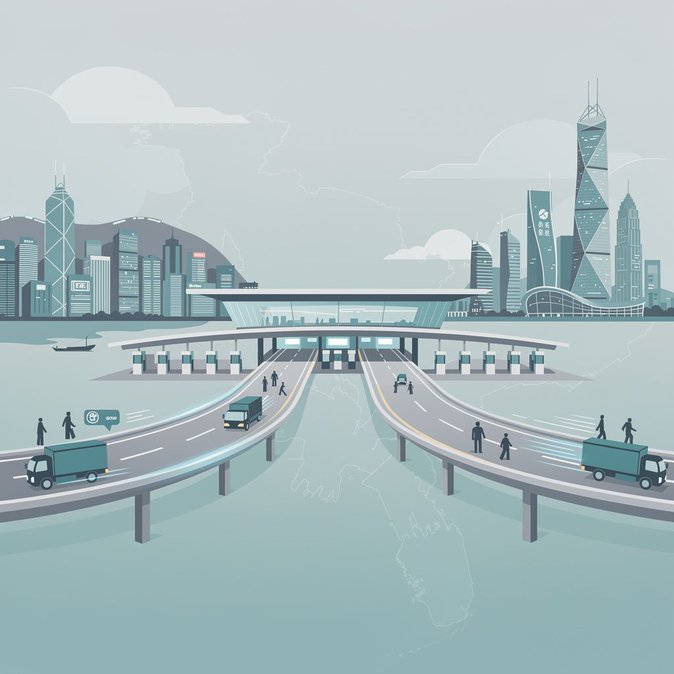
A milestone inspection tour by Xia Baolong, director of the Hong Kong and Macao Affairs Office, has confirmed that the rebuilt Huanggang Port on the Hong Kong-Shenzhen border is on track to open next month as the world’s largest land checkpoint. During his 17-18 June visit, Xia was shown the facility’s “collaborative inspection and joint-clearance” hall, where Hong Kong and mainland officers will sit side-by-side so travellers clear both exit and entry formalities in one stop. The same co-location model already operates at West Kowloon high-speed-rail terminus, but Huanggang will be its first large-scale road application, handling an estimated 300,000 passenger trips a day at peak. Hong Kong officials told Xia that enabling legislation is ready for Beijing’s Standing Committee to authorise the special administrative region’s jurisdiction in the shared halls. Once endorsed, a local bill will be tabled in LegCo before the port opens. Hong Kong’s Security Secretary Chris Tang said interior fit-out is being fast-tracked and joint systems tested with Shenzhen counterparts. For businesses, the modernised checkpoint is expected to slash coach and shuttle-van journey times between Hong Kong’s northern New Territories and booming tech parks in Futian and Nanshan to under 15 minutes. Logistics firms anticipate 24-hour freight clearance lanes and automated license-plate recognition will cut cross-border trucking costs by up to 20 percent. The port also anchors the government’s Northern Metropolis blueprint, which will cluster housing, R&D campuses and advanced-manufacturing zones near the boundary. Xia’s endorsement came hand-in-hand with praise for Hong Kong’s first five-year plan, now being drafted to align with China’s national 15th Five-Year Plan. Transport Secretary Mable Chan said the central government views Hong Kong as a core aviation and maritime hub; the port’s smart-customs trials—facial biometrics, blockchain cargo seals and paperless carnets—will be exported to other crossings once proven. Practically, employers moving staff between Hong Kong and mainland offices should update travel policies: co-location means passports will be stamped on the Shenzhen side, not on arrival downtown; e-channel preregistration for frequent travellers is advised. HR teams are also reminded that vehicles using the new “one-plate, two-customs” scheme must obtain Guangdong-issued electronic permits before the opening date.
Source: China Daily Asia