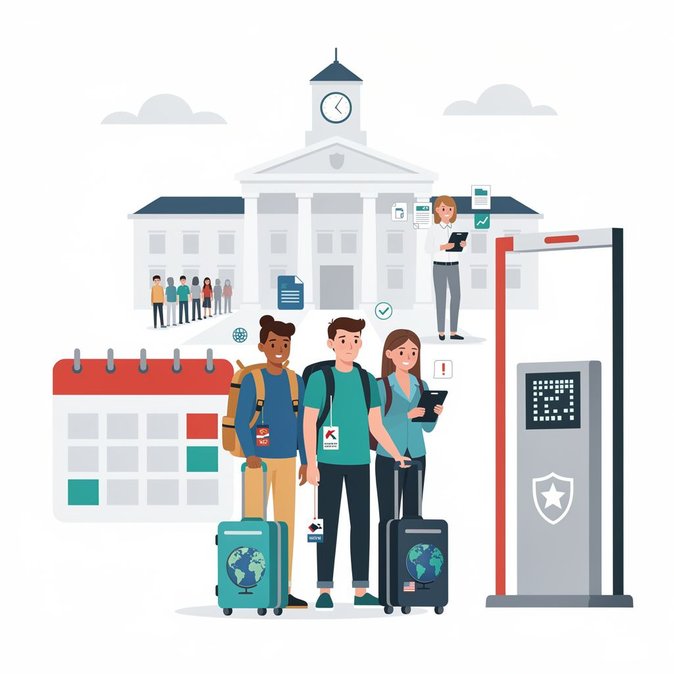
The Department of Homeland Security has finalized a regulation that ends the long-standing “duration of status” admission for most F-1 international students and replaces it with a fixed four-year stay. Under the rule, which takes effect in September, students who need more time must file an extension request with U.S. Citizenship and Immigration Services (USCIS) and demonstrate “continued full-time academic progress.” Since 1978, F-1 visa holders have generally been admitted for “D/S,” allowing them to remain in the United States for as long as it takes to complete their academic program plus any authorized practical training. DHS officials say the new limit closes a “loophole” that allowed some students to remain indefinitely by changing majors or transferring schools. Higher-education leaders, however, warn that the additional paperwork will strain university international offices and could deter prospective students in an increasingly competitive global education market. The four-year cap coincides with declining international enrollment and comes on top of social-media vetting requirements and travel bans that already complicate the student-visa pipeline. Universities relying on full-tuition international cohorts—particularly smaller state colleges and STEM graduate programs—face potential revenue shortfalls and talent gaps if students opt for Canada, the UK or Australia instead. Employers that recruit graduates for Optional Practical Training or H-1B status may also encounter more frequent immigration interruptions if extension requests are delayed. Practically, designated school officials (DSOs) must update their Student and Exchange Visitor Information System (SEVIS) protocols, counsel students on timely filing strategies and monitor academic progress more closely. Failure to secure an extension before the new four-year expiration date will place students out of status, potentially triggering a 10-year re-entry bar. Universities are rushing to create automated alerts and advising campaigns ahead of the fall semester to mitigate that risk. For multinational companies that depend on U.S.-educated talent, the rule could shorten on-campus recruiting timelines and shrink the pool of candidates eligible for post-graduation work authorization. Mobility teams should track USCIS processing times and budget for premium-processing fees when available, while lobbying efforts by higher-education coalitions aim to reverse or soften the rule in court.
Source: WBUR / Associated Press