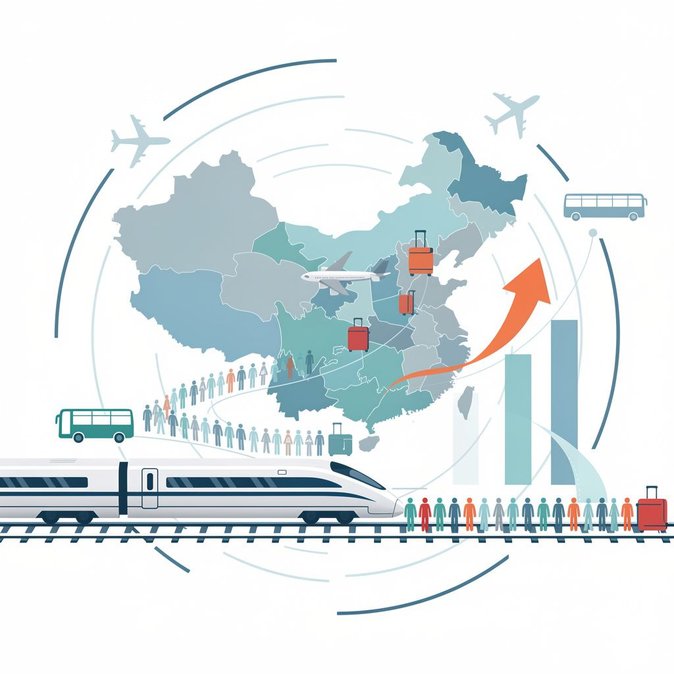
China’s two-month ‘Shuyun’ summer travel peak is in full swing, with rail, air and road networks experiencing their busiest July in history, according to an in-depth Xinhua feature published on 24 July 2026. State Railway Group projects 1.01 billion passenger journeys between 1 July and 31 August – an average of 16.3 million per day – while National Immigration Administration (NIA) data show inbound foreign entries up 30 % year-on-year thanks to expanded visa-free schemes. Changbai Mountain airport in Jilin, for example, has opened new routes to Beijing, Shanghai and Wuhan to meet demand from student field-study groups escaping the capital’s heat. Elsewhere, Heilongjiang’s Suifenhe border crossing reports record arrivals from Russia, highlighting the rebound of regional tourism corridors that feed local economies. Academics interviewed by Xinhua attribute the boom to rising disposable incomes, improved paid-leave provisions and a transport grid that now includes 165,000 km of rail lines and 270 certified civil airports. Digital capacity-planning tools are enabling operators to flex carriage and aircraft assignments in real time, mitigating weather disruptions such as typhoons and heatwaves. For mobility managers the message is clear: domestic connections inside China are running at near-capacity, so onward itineraries for expatriate assignees or fly-in project teams should be booked well in advance. The surge also signals strong consumer confidence, a positive data point for companies evaluating market-entry or expansion strategies that depend on workforce mobility.