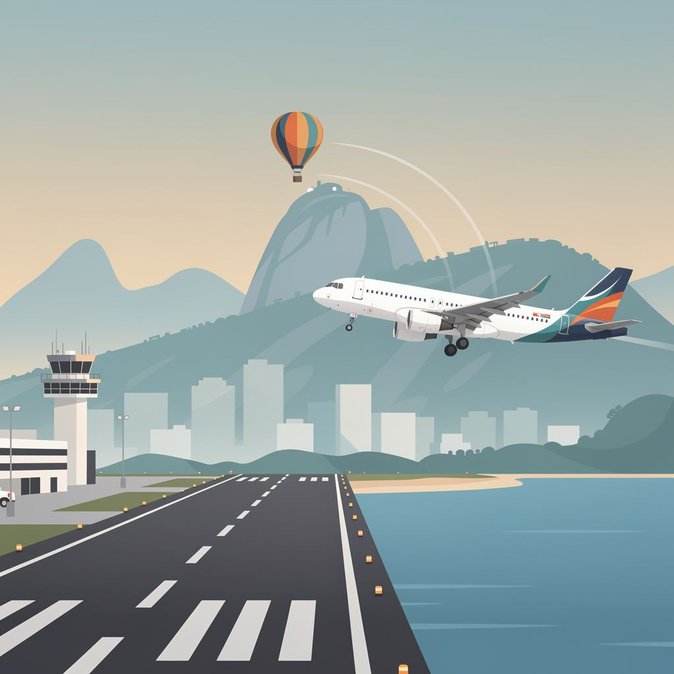
A domestic passenger jet was forced to abort its initial approach into Rio de Janeiro’s Tom Jobim International Airport (GIG) on Sunday morning after a large hot-air balloon drifted into the flight path. The crew executed a textbook go-around and landed safely on the second attempt; no injuries were reported and airport operations continued without delay. The incident occurred at approximately 08:15 local time, during one of the day’s peak arrival waves. Releasing unmanned balloons is a popular but illegal practice in parts of Brazil, especially during the Southern Hemisphere’s winter festivals. When a balloon descends uncontrollably, its metal frame and open flame can become a serious hazard for aircraft at low altitude. Brazil’s Civil Aviation Authority (ANAC) classifies the activity as an environmental crime punishable by up to three years in prison, yet enforcement remains challenging. Air-safety experts note that go-arounds impose additional fuel burn and crew workload; repeated occurrences could disrupt airline schedules and passenger connections. With July school holidays boosting leisure traffic, any runway closures or holding patterns around GIG cascade quickly through Brazil’s tight domestic network, affecting onward international departures. RIOgaleão concessionaire said it will intensify aerial surveillance and collaborate with local police units that track balloon launches. Several carriers—including LATAM and GOL—issued internal advisories reminding pilots to report balloon sightings immediately to air-traffic control. For corporate travel planners, the takeaway is to leave buffer time for July–August itineraries into Rio and São Paulo, where balloon sightings spike. Travel risk teams should brief employees on potential flight delays and reinforce the importance of maintaining flexible ground-transport arrangements when arriving on tight schedules.
Source: A Tribuna RJ