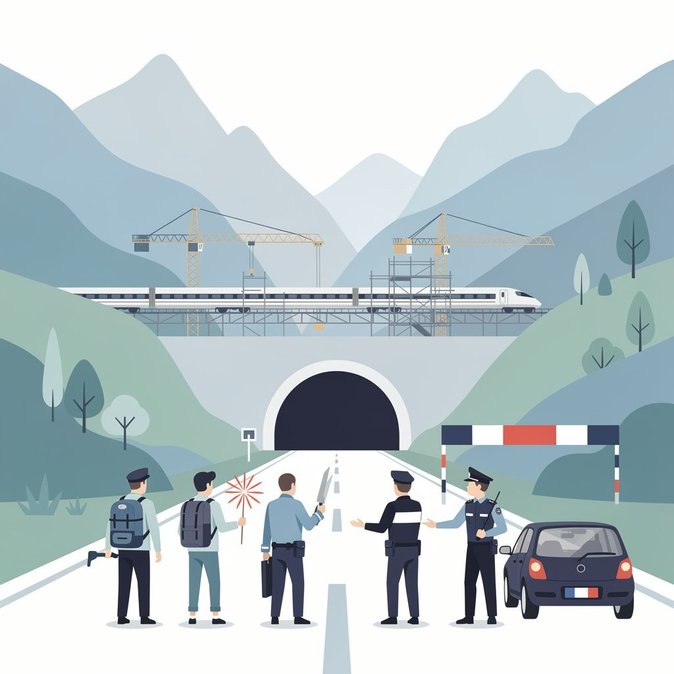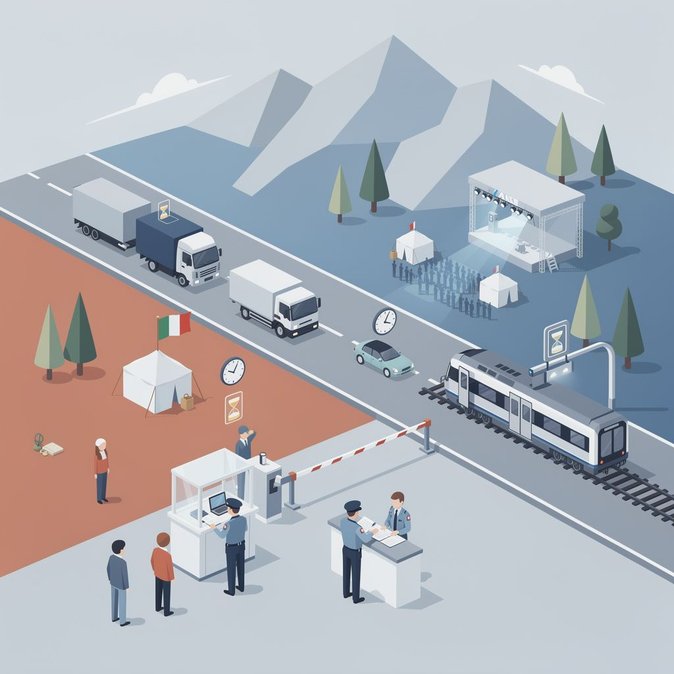
For the first time since the pandemic, Italy has reinstated full Schengen-internal border controls along the Alpine crossings with France from 00:00 on 24 July until 23:59 on 26 July. The government’s notification to the European Commission cites “foreseeable and serious threats to public order” linked to the 10th edition of the Alta Felicità music and protest festival in Venaus, heartland of the No-TAV movement opposing the Turin–Lyon high-speed railway. Activists from across Europe—including groups France’s intelligence services classify as violent—are expected to converge on the construction sites. In practical terms, travellers coming from France—whether by car through the Fréjus and Montgenèvre tunnels, by TGV on the Modane line, or by local mountain trails—must be prepared for identity and vehicle checks by the Polizia di Frontiera and Guardia di Finanza. Long-distance coaches have been advised to schedule additional buffer time, while SNCF and Trenitalia have warned of possible delays on Paris–Milan services. Business mobility teams should anticipate knock-on effects: the Prefect of Turin has extended the heavy-goods-vehicle circulation ban on the A32 and state roads 24/25 until 21:00 on Saturday to reduce congestion and secure emergency lanes. Multinational supply chains that normally route freight via Fréjus may need to re-route through Switzerland or reschedule weekend deliveries. Although the measure is temporary, it underscores a broader EU trend toward targeted, event-driven suspensions of Schengen free movement. Similar short-term controls were introduced for the G7 in Switzerland in June and for France’s Olympic security build-up. Travel managers should therefore review crisis playbooks, ensure staff carry passports even on intra-EU trips, and monitor real-time traffic bulletins from Viabilità Italia.