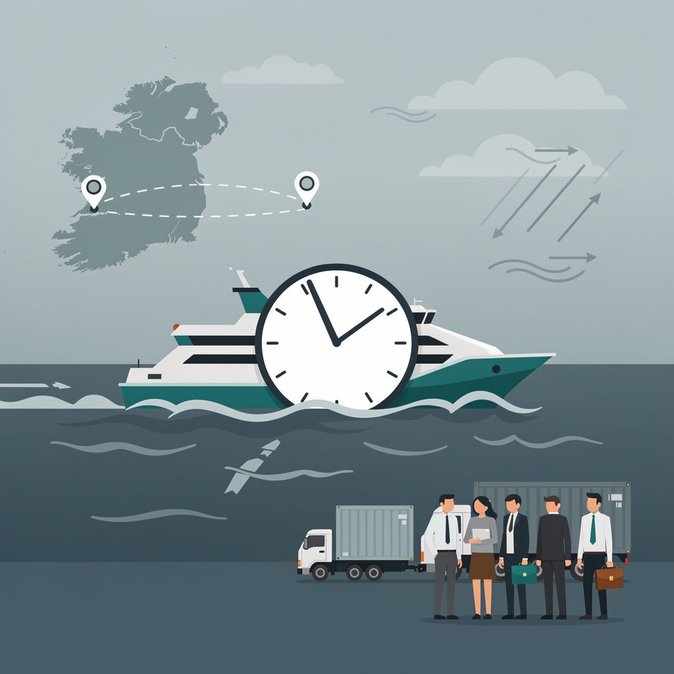
Travellers on the busy Dublin–Holyhead corridor faced fresh disruption today after Irish Ferries cancelled four high-speed *Dublin Swift* sailings and retimed several conventional services citing “operational reasons”. The affected departures include the 07:30 and 13:50 Dublin–Holyhead crossings and the 10:40 and 16:45 Holyhead–Dublin returns. Passengers were offered space on alternative *Ulysses* or *James Joyce* sailings and advised to check in at least 30 minutes before the new departure time. Although Irish Ferries did not specify a cause, the cancellations coincide with Met Éireann small-craft warnings for force-6 south-westerly and southerly winds on the east and west coasts, valid throughout 28 July. Rougher seas can make operating the 35-knot catamaran unsafe, whereas the larger conventional ferries are better able to cope. For corporate mobility teams the impact is immediate: the high-speed service cuts the sea crossing to two hours and is popular with same-day business travellers shuttling between Ireland, the North West of England and North Wales industrial hubs. Loss of capacity at peak morning and early-afternoon times risks missed onward rail connections from Holyhead and could force travellers onto later flights via Manchester or Birmingham, adding cost and emissions. Logistics firms that use the *Swift* for express van traffic must also reroute to slower vessels, potentially delaying just-in-time deliveries. Contingency options are limited. Stena Line’s competing *HSS* catamaran is already operating at near-full load, and air fares on the Dublin–Manchester and Dublin–Liverpool routes spiked 18 % this morning according to GDS data. Employers should therefore notify travellers, rebook on conventional sailings where possible, and budget additional journey time. The incident highlights the importance of monitoring marine weather warnings during the summer storm season and building flexibility—such as overnight stays—into tight travel schedules. Irish Ferries says affected customers can amend or refund bookings at no charge via its contact centre but encourages passengers who can accept the alternative times to do so to ease call-centre pressure.
Source: Irish Ferries Sailing Updates