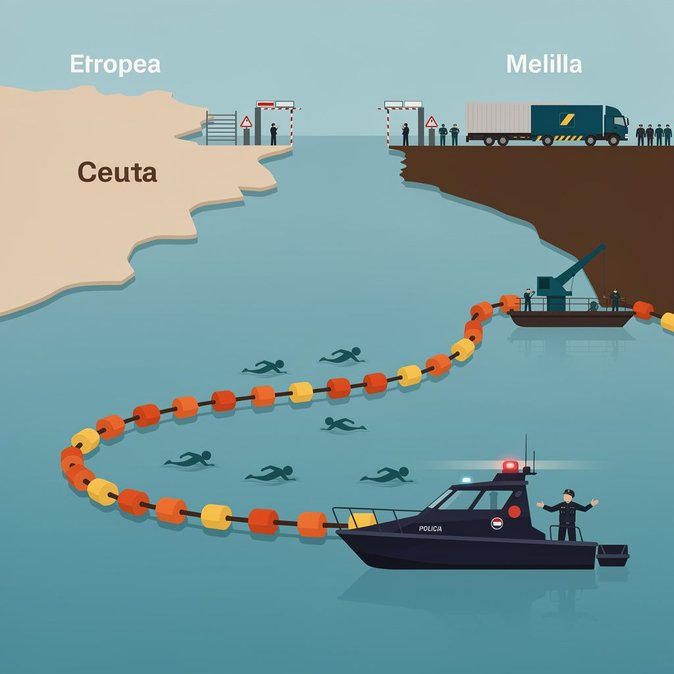
Spain’s Interior Ministry plans to replicate the controversial 500-metre floating barrier recently installed off Ceuta along the coastline of Melilla, according to a two-page instruction signed by Secretary of State for Security Aina Calvo and obtained by El País. The order, circulated to National Police and Guardia Civil units on 3 August and seen by the newspaper on the 4 August, authorises officers to carry out immediate ‘hot returns’ of anyone who swims past the buoys. The maritime barrier—30-70 cm high above water with a one-metre submerged skirt—was hurriedly deployed at Ceuta’s Tarajal breakwater after last week’s unprecedented influx. Calvo’s note argues that similar “border-containment elements” are justified in Melilla to meet the Supreme Court’s demand that a physical obstacle must be present before summary expulsions can occur. The court had recently ruled that pushing back swimmers violated due-process guarantees because the sea itself was not a man-made barrier. Police union Jupol condemned the plan as a “cosmetic measure” that fails to add staff or improve overwhelmed holding facilities. Human-rights groups warn that floating fences merely push migrants toward more dangerous routes while doing little to address asylum backlogs on the mainland. From a corporate-mobility standpoint, the development signals Madrid’s determination to harden its external frontier amid EU pressure while avoiding a full Schengen suspension. Companies that rotate staff through Melilla’s maquila zones—or that send technicians via the enclave’s limited air links—should anticipate tighter maritime patrols, potential sea-lane closures and on-the-spot identity checks. Legal advisors also note that the memo widens the legal basis for expedited removals, increasing litigation risk for NGOs and cross-border service firms that provide humanitarian or logistical support. Contingency plans for crew changes, port calls and supplier visits in Melilla should therefore be revisited in the coming weeks.
Source: El País