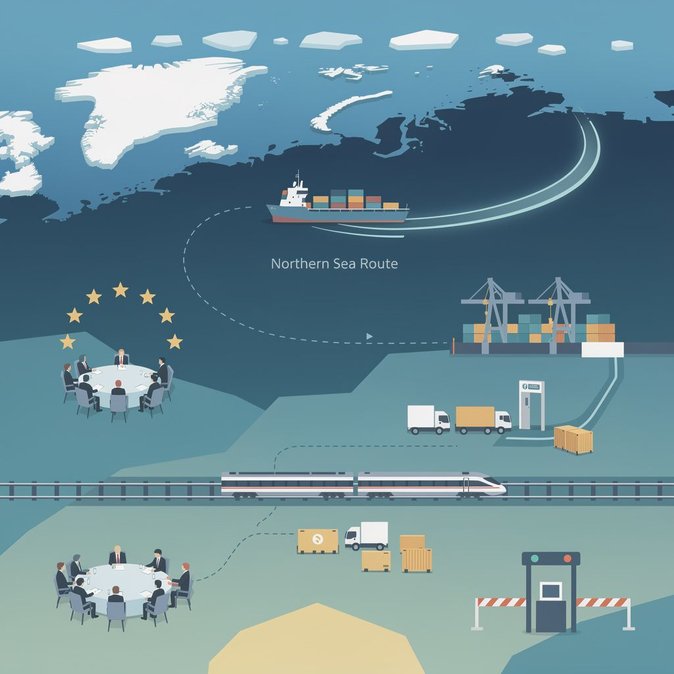
European leaders converged on Rovaniemi, Lapland, on 14 September for the first-ever European Arctic Summit. Hosted by Prime Minister Petteri Orpo, the meeting tackled a fast-changing Arctic where climate change is opening ice-free sea passages for longer periods each year. Leaders from 15 EU and EEA countries, together with European Commission Vice-President Kaja Kallas, agreed that the emerging Northern Sea Route could cut sailing times between Asia and Europe by up to ten days, transforming global supply chains. Finland sees both opportunity and risk. The Port of Oulu and the planned deep-water port in Kirkenes, Norway—linked to Finland by rail—could become key trans-shipment hubs, giving Finnish exporters a shorter route to Asian markets. Ministry of Transport officials estimate that container flows through Finnish ports could rise 15 % by 2035 if the corridor develops as forecast. At the same time, the summit heard intelligence briefings about Russia’s rapid military build-up on the Kola Peninsula and growing Chinese scientific presence in the High North, underscoring the need for tighter border vigilance and investment in ice-class coast-guard vessels. For global mobility managers the outcome is two-fold. First, companies with staff rotations to northern mines, LNG terminals or telecom projects should expect improved seasonal sea and air links via Rovaniemi and Ivalo as the EU funnels infrastructure money northwards. Second, heightened security means stricter vetting of foreign contractors and possible spot-checks at the Finnish-Norwegian and Finnish-Russian borders; the Border Guard confirmed it will deploy additional biometric equipment and enforce the EU Entry/Exit System (EES) on schedule. The summit communiqué calls on the European Investment Bank to accelerate funding for the “Arctic Corridor” rail link from Rovaniemi to Kirkenes and invites businesses to join an ‘Arctic Mobility Round-table’ in Helsinki in November. If realised, the corridor would give Finland its first direct rail-sea gateway to the Atlantic, reducing reliance on the congested Danish Straits. Logistics firms such as Nurminen Logistics and Kuehne + Nagel have already signalled interest in pilot shipments during the 2027 summer navigation season. Finally, the leaders agreed to press ahead with a common EU Arctic visa processing centre in Helsinki, designed to speed work-permit issuance for engineers and seafarers heading to projects north of the Arctic Circle. The Finnish Immigration Service (Migri) says the one-stop shop could cut permit times from 60 to 30 days, an important gain for companies scrambling for talent in the remote region.
Source: Associated Press
How VisaHQ can help
VisaHQ simplifies the visa application process for individuals and businesses. Check current travel requirements, prepare the required documents and manage your application online through the VisaHQ Finland portal.More From Finland
View all
EU Visa Working Party debates Schengen fee hike – Finnish applicants could pay up to €95 in 2027
Guardian: Nine EU states delay EES biometrics – Finland stays on schedule, offers ‘fast-lane’ for winter tourists