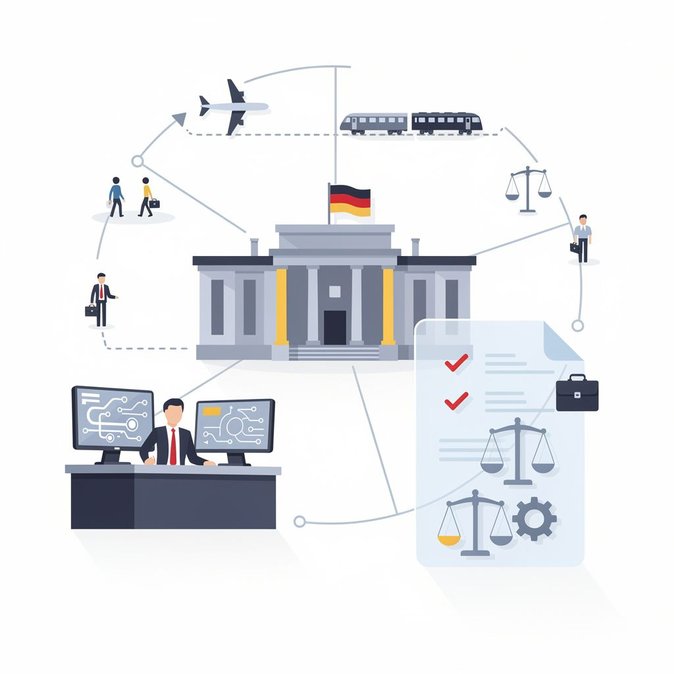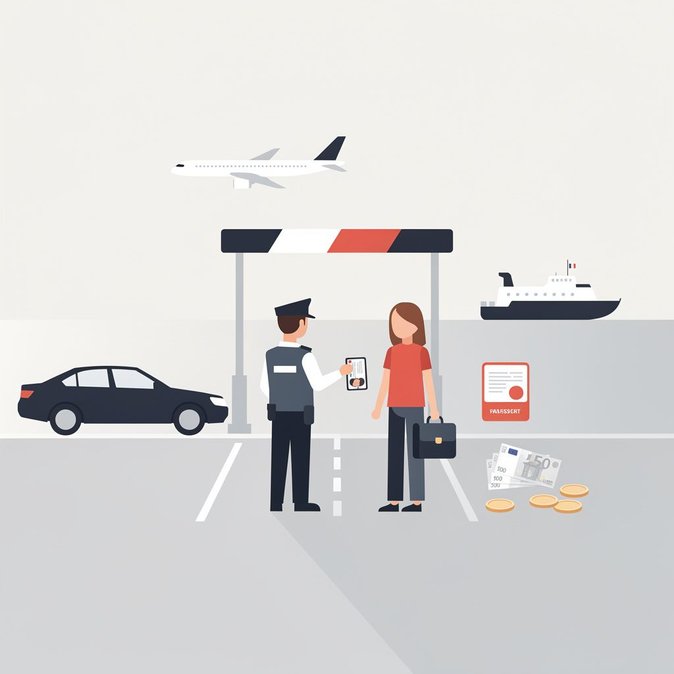
A new FAQ issued by the Federal Ministry for Digital and Transport on 18 September 2026 confirms that Germany’s Digital Passenger Processing Act is now in force. The law, published in the Federal Gazette on 22 July, amends five statutes—including the Residence Act and Passport Act—to allow airlines and airports to use facial recognition for check-in, bag-drop, security and boarding. Participation is voluntary for travellers but could prove attractive to frequent flyers: once a passenger’s e-passport chip is verified and converted into an encrypted biometric template, they may pass subsequent checkpoints without showing documents. Data are erased no later than three hours after departure. Crucially, the system is open to EU citizens and third-country nationals alike, provided their passport contains an ICAO-compliant chip. From a mobility-management standpoint, the development offers tangible efficiency gains. The ministry estimates annual savings of €63 million for the aviation sector through shorter queues and lower staffing costs. Early-adopter hubs—Frankfurt, Munich and Berlin Brandenburg—aim to pilot the technology by the Christmas peak, subject to vendor certification from the Federal Office for Information Security (BSI). Corporate travel teams should, however, update privacy notices and obtain traveller consent where company profiles are stored with airlines. Employers that cover the cost of expedited clearance programmes may also wish to compare Germany’s free biometric lanes with paid offerings such as CLEAR—or with the EU Entry/Exit System (EES) kiosks that will become mandatory in late 2026. Because borders remain a federal responsibility, passports will still be checked on non-Schengen flights, and current land-border controls are unaffected. Nevertheless, the move signals Germany’s broader strategy of linking secure digital identity (EUDI-Wallet) with seamless, paper-free mobility—a trend global mobility managers will need to track closely over the next 18 months.