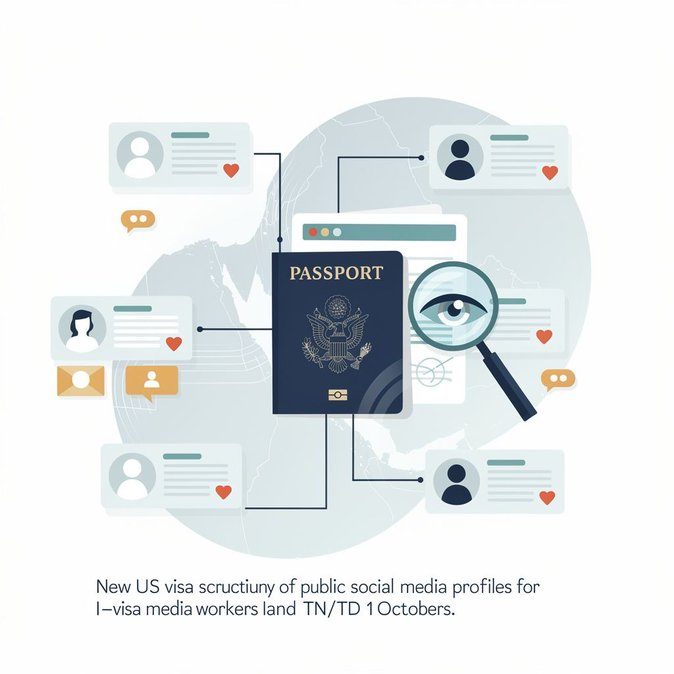
Starting 1 October 2026, the US Department of State will require foreign media representatives (I visa) and USMCA professionals (TN/TD visas) to make their social-media profiles public during visa adjudication. The directive, published on 18 September and highlighted by Gulf News on 21 September, extends a policy that already affects students, temporary workers and several other categories. For the UAE’s business and media community—many of whom fly frequently to the United States through Dubai and Abu Dhabi hubs—the change means additional compliance steps. Applicants must review Facebook, X/Twitter, LinkedIn and other platforms for potentially problematic content and ensure profile settings allow consular officers full visibility. Failure to comply could see applications refused under section 212(a) of the Immigration and Nationality Act. Legal advisers to multinational firms in the UAE note that the broader trend is toward exhaustive digital screening. Since 2025, the US has asked most applicants to list all social-media handles used in the past five years; consular officials can then demand passwords under existing discretionary authority. The October expansion formalises that practice for new categories and is likely to lengthen interview times at the US Consulate in Dubai and the US Embassy in Abu Dhabi. Companies sending staff on media assignments or short-term professional projects should update travel checklists now. Suggested actions include auditing corporate social-media guidelines, counselling employees on acceptable online conduct, and building extra lead time into project schedules to accommodate possible administrative processing. Immigration practitioners do not expect immediate reciprocal measures from the UAE, but they emphasise that social-media activity increasingly influences visa decisions worldwide. HR teams should track developments closely and brief travellers accordingly.
Source: Gulf News