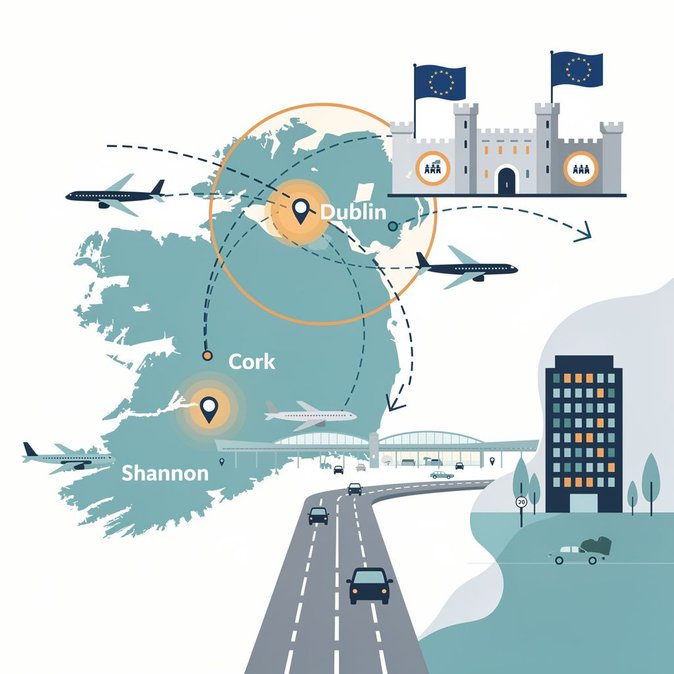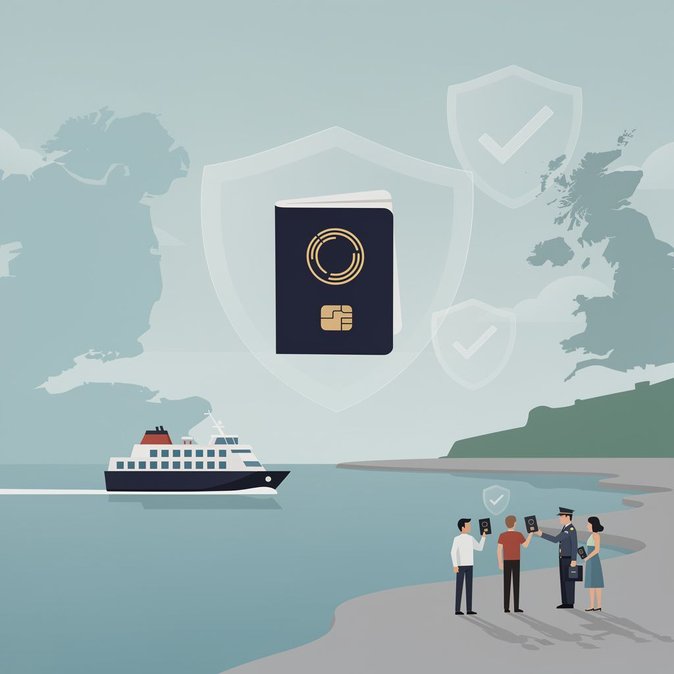
The Department of Foreign Affairs (DFA) has quietly updated its official travel-advice page for Great Britain to confirm that, from Monday 28 September 2026, most ferry operators—including Irish Ferries and Stena Line—will insist that every passenger carries a valid Irish passport or passport card when sailing between Irish and British ports. Although the Republic and the United Kingdom form part of the Common Travel Area (CTA), ferry companies have traditionally accepted a wide mix of photo-ID—driving licences, student cards or even utility bills—for Irish routes. Operators say the tightening reflects three converging pressures: the UK’s phased roll-out of its Electronic Travel Authorisation (ETA) system for non-British/Irish visitors; heightened security around the Irish EU Council Presidency meetings; and a desire for consistency with airlines, which imposed a passport-only rule in February. For business travellers the new requirement is more than a paperwork tweak. HR mobility teams will need to audit cross-channel travellers’ passport validity, ensure contractors and short-term assignees hold physical documents (many rely on digital ID only) and build in extra lead-time while staff renew lapsed passports. The DFA warns that Irish citizens who cannot produce a passport will no longer be able to prove their exemption from the ETA scheme at UK border control, risking denial of boarding or refusal on arrival. Ferry companies are advising corporate groups to upload passport details in advance to speed check-in, while ports in Dublin, Rosslare, Belfast and Holyhead are reviewing e-gate capacity to avoid peak-season congestion. Multinationals with ‘twin-island’ operations—particularly in tech and pharma—are being urged to brief employees immediately, as the change coincides with end-of-quarter travel and the resumption of in-person training programmes. The move also has downstream implications for Irish residents who are not citizens. Third-country nationals travelling on Stamp 1G or Stamp 4 permissions already require passports, but the uniform rule will remove the previous ambiguity faced by family members using alternative ID within the CTA. The DFA says it will continue to monitor implementation and publish carrier-by-carrier guidance.