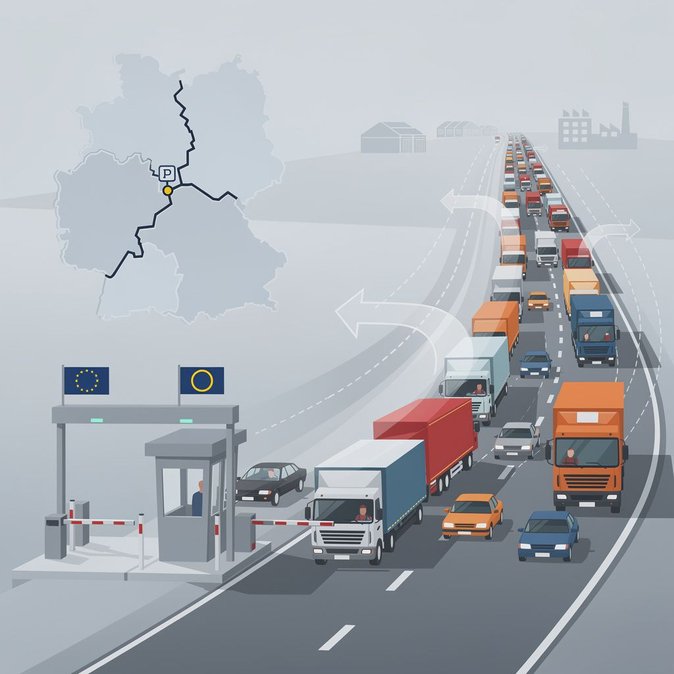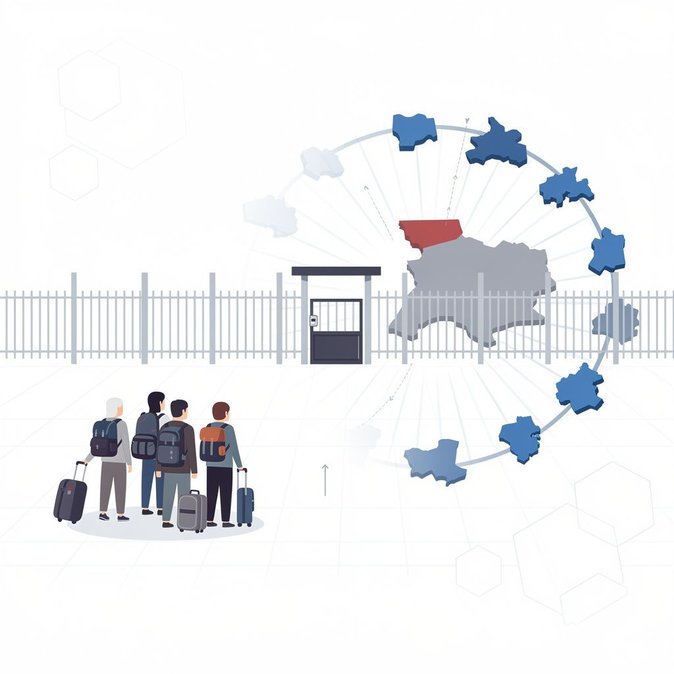
Poland’s hard-line approach to the migrant crisis on its eastern frontier is moving centre-stage in Brussels. Since March 2025, Warsaw has refused to accept asylum applications from people who cross irregularly from Belarus, arguing that Alexander Lukashenko’s regime is “weaponising” migration to destabilise the European Union. What was announced 18 months ago as a temporary emergency measure has become a pillar of Poland’s border regime: migrants caught in the forest strip are pushed back to Belarus unless they are visibly pregnant, children or face persecution in Belarus itself. Human-rights groups say that even these limited exemptions are applied unevenly. Now Deputy Interior Minister Maciej Duszczyk is pressing for the so-called “Polish solution” to be enshrined in EU law. In interviews this weekend he hailed European Commission President Ursula von der Leyen’s plan for a new “European emergency response framework” that would allow member states to derogate from normal asylum procedures during episodes of “instrumentalised migration”. Warsaw sees the initiative as formal recognition that the tactics tested on the Polish-Belarusian border could be rolled out across the bloc when other frontiers, such as Ceuta in Spain, come under sudden pressure. Critics warn that normalising the suspension of the right to seek asylum would punch a gaping hole in international refugee law. Dutch MEP Tineke Strik notes that the principle of non-refoulement—which prohibits sending people back to danger—was created after many European countries denied safe haven to Jews in the 1930s. Michael O’Flaherty, human-rights commissioner at the Council of Europe, says the Commission risks “crossing the line into illegality”. For business-mobility managers, the debate is more than academic. Polish officials insist that the policy keeps freight and legitimate travel flowing by preventing migrants from blocking roads and rail lines near the Kuźnica–Bruzgi crossing. But logistics operators trading with Belarus and the Baltic states fear that an EU-wide emergency regime could trigger copy-cat pushback policies elsewhere, leading to legal disputes over drivers’ liability for irregular passengers and higher insurance costs. Multi-national employers should review duty-of-care policies for staff transiting land borders in Central Europe and monitor the 1 October meeting of EU interior ministers, where details of the framework are due to be unveiled.
Source: 24 Seven News