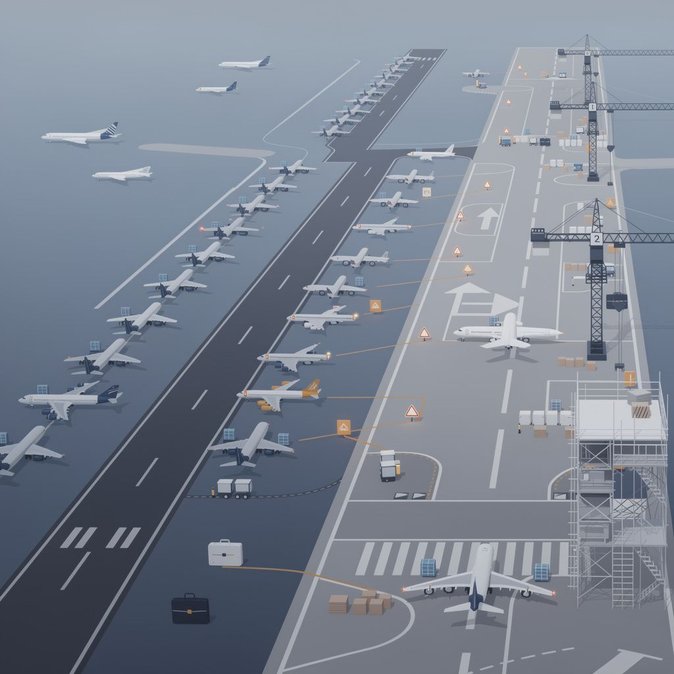
London Heathrow Airport has privately told ministers that its long-promised third runway is now unlikely to open before 2039— four years later than the 2035 target backed by the previous government. Reporting by Business Travel News Europe on 28 September cites infrastructure-planning delays and the need for an extended public-consultation period on noise and carbon impacts. The slippage puts a question mark over national aviation-capacity forecasts used by corporate travel buyers when negotiating long-term airline deals. Heathrow handles a higher share of premium-class and transfer passengers than any other European hub; without new slots, carriers may redeploy scarce capacity to higher-yield routes, keeping business-class fares elevated. Prime Minister Andy Burnham has distanced himself from the project, calling it “a matter for London and Londoners”, signalling a less interventionist approach than his predecessor. Heathrow will launch an eight-week community consultation on 27 October, but obtaining planning permission by 2029 is now its “ambitious” best case. Supply-chain implications are broad. Regional exporters fear that without extra long-haul slots the UK risks losing freight flows to continental rivals, while inward-investment agencies warn that constrained air capacity could erode Britain’s allure as a headquarters location. Conversely, environmental groups claim victory, arguing that the delay creates space to rethink aviation-growth assumptions in light of net-zero targets. Global-mobility teams should revisit travel-programme assumptions on route availability and budgeting. In the short term, competition between Heathrow and rival hubs such as Amsterdam Schiphol and Paris CDG for corporate contracts is set to intensify, potentially benefiting travellers willing to connect outside the UK.
Source: Business Travel News Europe