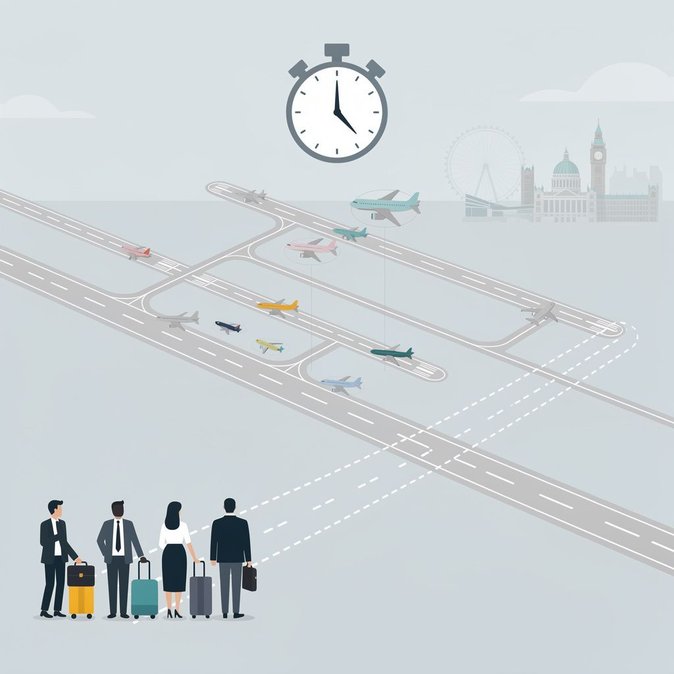
In a BBC interview ahead of the Labour Party conference, Prime Minister Andy Burnham refused to give explicit backing to Heathrow Airport’s long-debated third-runway project, saying local opinion should take precedence before central government intervenes. The comments mark a departure from the previous administration, which formally supported expansion last year. Heathrow warned over the weekend that the runway could be delayed until 2039 if political uncertainty persists. Opponents of the scheme cite noise, safety and carbon emissions, while business groups and the GMB union argue that the UK risks ceding hub-airport status to Paris CDG or Frankfurt without additional capacity. Heathrow operates at 99 % runway utilisation; delays already ripple through global schedules, and cargo slots are scarce during peak hours. For global-mobility teams, runway uncertainty muddies long-term duty-of-care and cost planning. A larger hub would increase direct long-haul frequencies and reduce reliance on continental connectors—critical for time-sensitive assignments and high-value supply chains. Conversely, a prolonged hiatus may redirect airline investment toward Manchester or regional bases, reshaping domestic connection patterns. Environmental policy also hangs in the balance. If expansion stalls, government may double down on the SAF (sustainable aviation fuel) mandate and rail-air substitution targets to meet carbon budgets. Companies could face higher APD (Air Passenger Duty) on premium cabins to manage demand, an issue that should factor into 2027-28 travel budgets. Burnham’s stance suggests any Heathrow decision will not come before a fresh round of local consultations, pushing statutory planning well into the next Parliament. Travel buyers therefore have at least a three-year window to model capacity-constraint scenarios and negotiate contingency agreements with carriers at Gatwick, Birmingham and regional airports.
Source: Reuters (via MarketScreener)