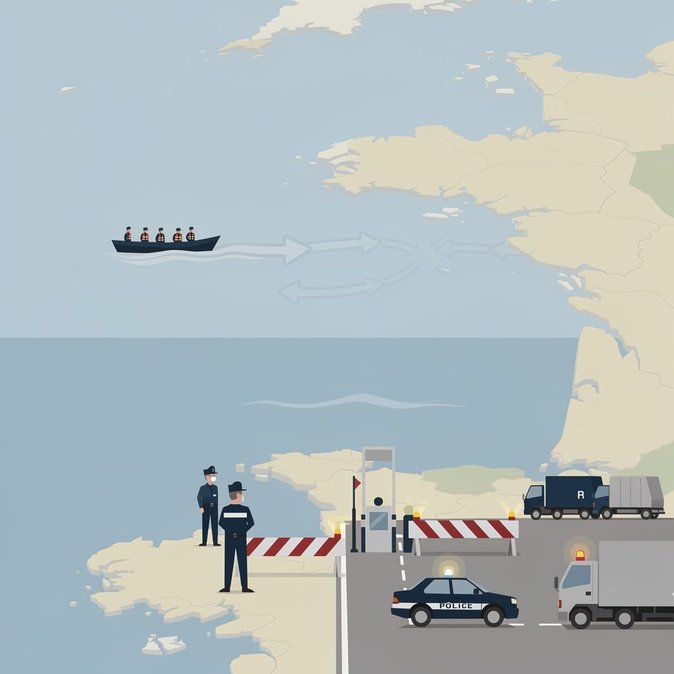
France’s Interior Ministry confirmed on 30 September that it will let the pilot “one-in, one-out” agreement with the United Kingdom lapse at midnight on 1 October. The scheme, signed in July 2025, allowed London to return to France one Channel boat migrant for every asylum-seeker it accepted legally from French soil. While the UK’s new Labour government pressed hard for an extension during Prime Minister Andy Burnham’s meeting with President Emmanuel Macron earlier this month, Paris judged that the experiment had failed to deter crossings and was disproportionately costly. According to figures cited in Parliament, the UK returned only about 1,400 people to France in 14 months, while nearly 67,000 crossed irregularly during the same period. Each removal cost the UK an estimated £56,000 (€65,000). Advocacy groups in both countries also challenged the legality of the exchange, arguing that it commoditised asylum rights and left returnees in legal limbo once back in France. Ending the programme removes what little bilateral legal pathway existed for asylum seekers post-Brexit and returns responsibility for small-boat arrivals squarely to unilateral national systems. For French business travellers and HR teams, the immediate implication is an expected increase in police and customs activity along northern coastlines and at Channel ports as France reallocates resources previously tied up in processing UK returns. UK-bound staff may also face tighter scrutiny when embarking from Calais, Dunkirk, or Eurostar terminals, particularly during the peak Christmas travel window. Employers should warn travellers to build in additional time for exit checks and be ready to present documentary proof of business purpose to French border officers. Strategically, France’s decision signals a tougher stance in forthcoming EU–UK negotiations on migration cooperation. It may also harden French opposition to any UK plans to establish third-country asylum-processing facilities if those would rely on returns through French territory. Multinationals moving talent between their French and British operations should therefore monitor legislative developments on both sides of the Channel and review contingency relocation options, such as Ireland or the Netherlands, should cross-Channel mobility become more politically fraught.
Source: Le Monde