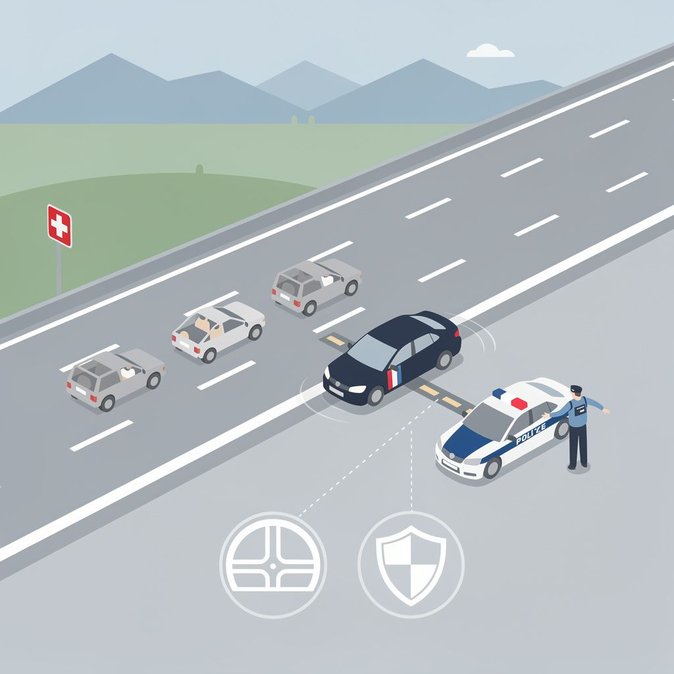
In the early hours of Sunday, 4 October 2026, Fribourg cantonal police intercepted a 34-year-old French motorist who had been driving against traffic on the A1 motorway between Lully and Avenches. No collision occurred, but officers discovered that the France-registered vehicle was neither insured nor equipped with the mandatory Swiss motorway vignette. The driver was arrested at Domdidier and faces criminal proceedings as well as administrative fines. The incident is a vivid reminder that foreign-plated company cars entering Switzerland must carry both valid third-party liability coverage and the CHF 40 vignette before using the national motorway network. Since January 2024, the Federal Office for Customs and Border Security (FOCBS) has deployed automated cameras that read licence plates and match them against the vignette payment database; penalties start at CHF 200, plus the cost of a vignette. Insurance non-compliance, meanwhile, can void any claim for damages and exposes the driver and the employer to civil liability. Multinational firms with fleet vehicles stationed in neighbouring EU countries should check that their Green Card (international motor insurance certificate) explicitly covers Switzerland and that copies are carried in the glove compartment. From a global-mobility perspective, mobility managers should brief cross-border commuters and short-term assignees who occasionally drive personal or rental cars into Switzerland. Corporate travel policies ought to mandate vignette purchase at border petrol stations or online via the e-vignette portal. GPS-tracking solutions can also flag unauthorised motorway use. The Fribourg police emphasised that wrong-way driving (Falschfahrt) is treated as a serious offence under Article 90 paragraph 3 of the Road Traffic Act, carrying potential jail time. The swift interception prevented what could have been a fatal head-on collision—a sobering caution for all drivers entering Swiss motorways.
Source: Nau.ch