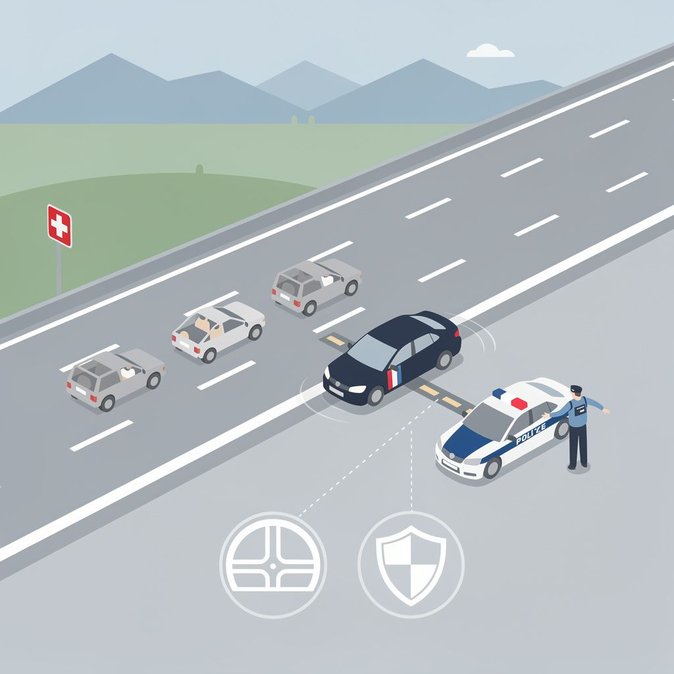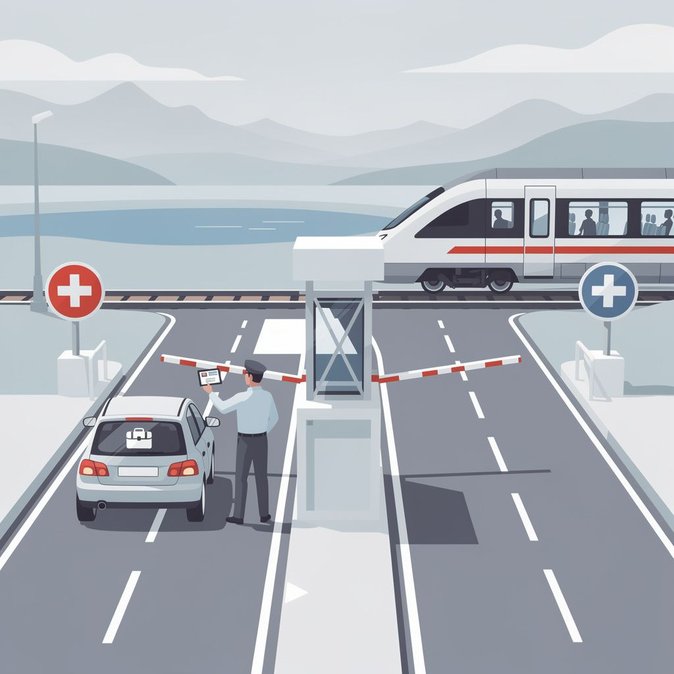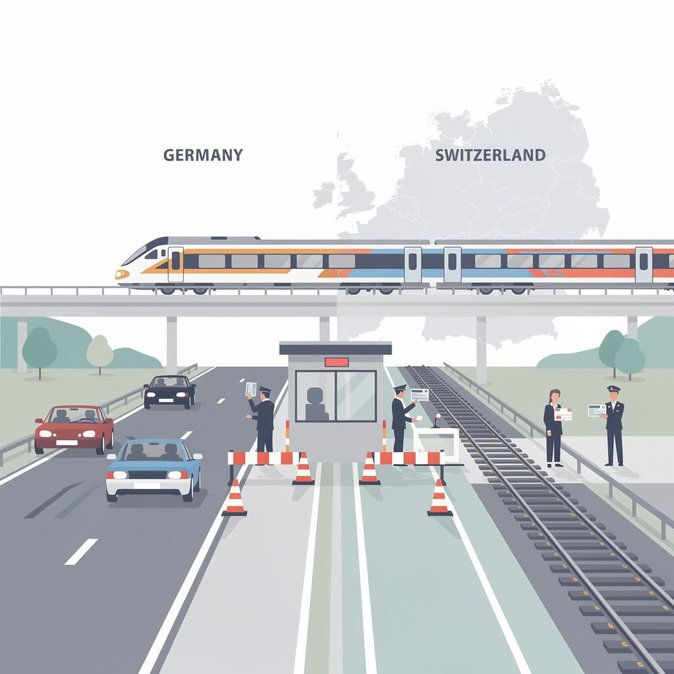
The European Commission’s updated dashboard on temporary Schengen border controls, published on 4 October, confirms that Germany has extended its internal checks for another six-month period, running from 16 September 2026 to 15 March 2027. The measure explicitly covers Germany’s land frontiers with nine neighbouring states, including its 362-kilometre border with Switzerland. Berlin justifies the extension by citing persistently high irregular migration, the strain on reception facilities and people-smuggling networks that have re-routed through Austria and the Western Balkans. In practice, the controls mean that German federal police continue to carry out spot checks on trains, at motorway crossings and on back roads in Baden-Württemberg and Bavaria. Although travellers with valid EU/Schengen documents may still cross freely, they should carry passports or national ID cards and factor in occasional delays. For Swiss businesses the main concern is the potential impact on the estimated 65,000 daily cross-border commuters who live in southern Germany and work in the cantons of Basel-Stadt, Basel-Landschaft, Schaffhausen and Zurich. Logistics operators moving time-critical goods from Swiss industrial hubs into Germany also report sporadic tailbacks, especially at the Weil-am-Rhein/Autobahn (A5) and Thayngen (A4) crossings. Mobility managers should brief staff to keep residence or work-permit originals on hand and allow extra time when travelling to German airports for long-haul connections. Companies that routinely send technicians by rail should note that Bundespolizei agents have increased on-board ID checks on ICE and regional trains between Basel SBB and Freiburg or Karlsruhe. Under the Schengen Borders Code, Germany must justify each prolongation as a measure of last resort and submit detailed risk assessments to the Commission. Swiss officials in Bern are monitoring the situation but have indicated that reciprocal controls are not envisaged. However, if neighbouring France also prolongs its controls beyond the current 31 October deadline, Swiss exporters could face a double squeeze on two major overland routes to the EU single market.