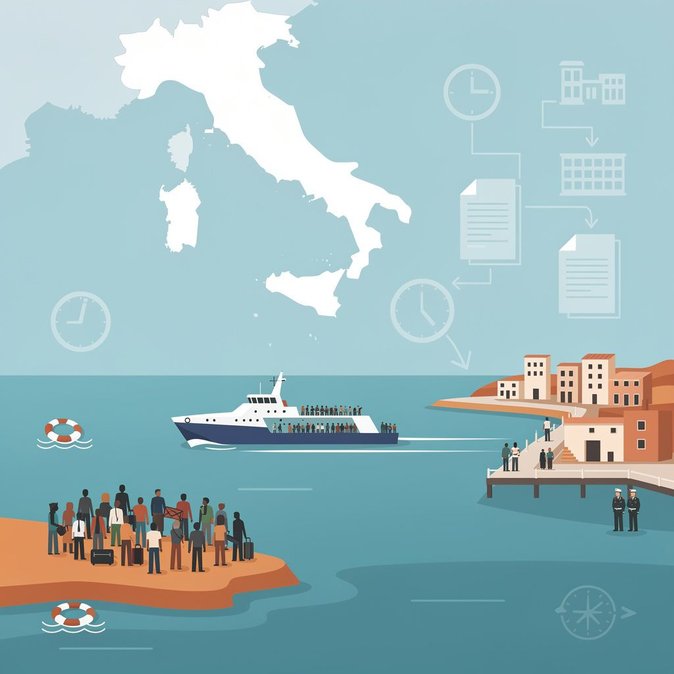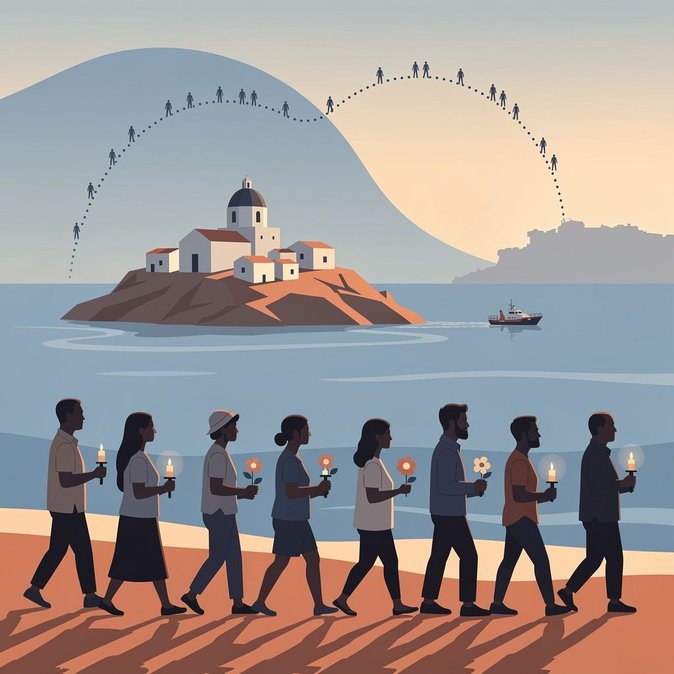
Thousands gathered at Porta d’Europa on 3 October to mark the 13th anniversary of the 2013 Lampedusa disaster that claimed 368 lives, the worst maritime tragedy in recent Italian history. Organised by the Committee 3 October, the march wound from the harbour to the sculpture overlooking the strait, where participants laid wreaths and read migrants’ testimonies. Committee president Tareke Brhane used the occasion to criticise what he called Europe’s “contradiction” of honouring the dead while outsourcing border control to third countries with poor human-rights records. He called on the Italian Government and the EU to expand safe and legal pathways, accelerate humanitarian visas and abandon policies that “externalise” asylum processing. The commemoration comes as arrivals to Italy passed 150,000 for the year, fuelling political debate over the forthcoming 2027 *Decreto Flussi* quota and Italy’s continued suspension of Schengen free movement with Spain. Although the event had no immediate policy outcome, it keeps migration at the top of the domestic agenda as Parliament debates budget allocations for reception centres and maritime patrols. For companies employing non-EU nationals and rotating staff through Italy’s southern ports, sustained civil-society pressure could translate into tighter scrutiny of labour-sponsor visas versus humanitarian channels. HR teams should track parliamentary discussions on the next quota decree, expected later this month, which may tighten or expand professional categories eligible for fast-track permits. Meanwhile local authorities in Lampedusa have asked for additional national funding to extend the commercial pier, arguing that humanitarian operations are disrupting the island’s ferry and tourism schedules—another variable for firms relying on inter-island logistics.
Source: ANSA