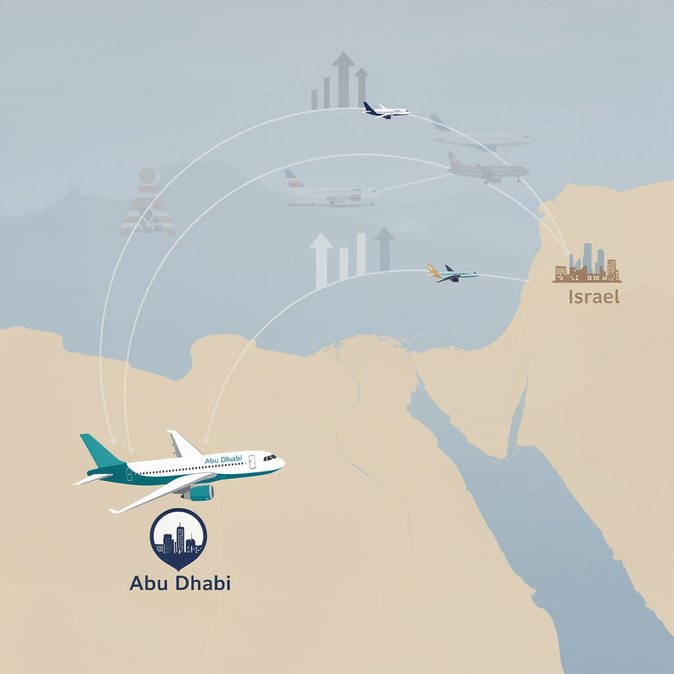
The UAE General Civil Aviation Authority (GCAA) said late Monday that it has finished transferring all passengers affected by flydubai’s suspension of Tel Aviv flights. Between 2 and 5 October, 37 special services operated from Dubai to Ben Gurion, carrying 7,479 travellers, while Israeli carriers were granted ad-hoc permits to run additional rotations. Etihad Airways maintained its regular six-daily Abu Dhabi services throughout the disruption. GCAA officials said the rapid response demonstrated “effective bilateral coordination” under the 2020 UAE–Israel air-services agreement. The authority added that it remains in close contact with airlines to monitor security developments and stands ready to issue further exemptions if needed. For mobility managers, the message is that contingency lift remains available even when primary carriers ground operations. Travel-risk consultants note that the incident has underscored the importance of diversifying carrier dependencies in volatile markets. Companies with pre-arranged corporate fares on both UAE and Israeli airlines were able to rebook faster, while those relying solely on flydubai faced 48-hour delays. Going forward, the GCAA is expected to tighten cockpit-security reporting requirements and may revisit the approval process for so-called “deadheading” crew rotations—a practice scrutinised after the mid-air attack on flight FZ1073’s captain. Businesses should update traveller-tracking dashboards to reflect possible last-minute aircraft swaps and remain alert for new NOTAMs affecting UAE–Israel airspace.
Source: ARN News Centre