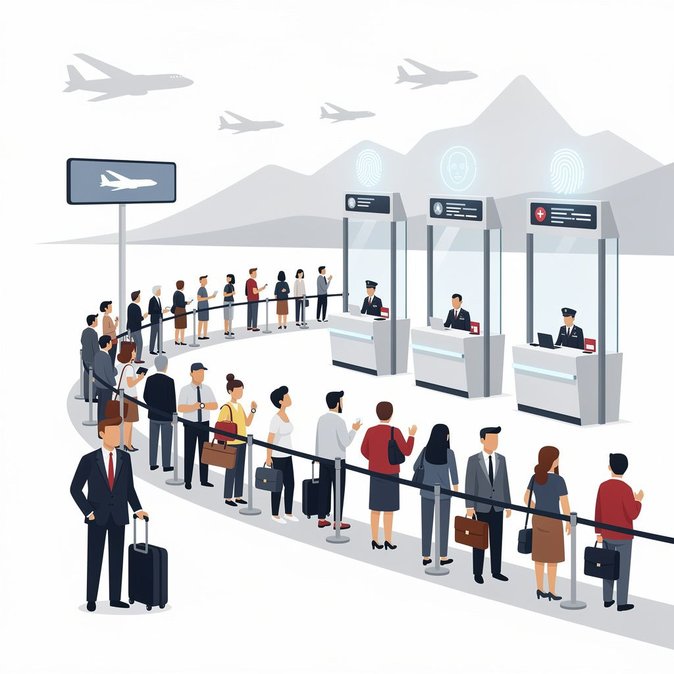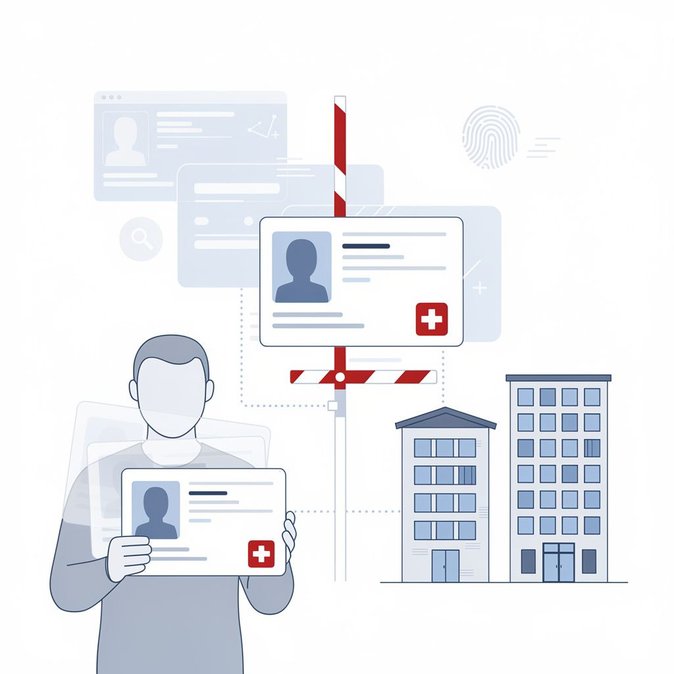
Swiss migration authorities are facing sharp criticism after revelations that a 34-year-old Kosovo national repeatedly entered Switzerland under a false French identity and even managed to register two companies before being caught at the Geneva border last weekend. According to multiple Swiss media reports cited by The Local on October 12, the man first approached the migration offices in both Zurich and Geneva posing as a French resident working in the neighbouring border region. By presenting counterfeit French identity documents he secured a coveted G-permit, which allows foreign nationals living in the EU to commute daily or weekly to a job in Switzerland. Holders of this status enjoy simplified immigration formalities, lower social-security contributions and – crucial for many employers – exemption from the annual quotas that apply to overseas hires. Armed with the G-permit the fraudster was able to open two limited-liability companies in the commercial registers of the cantons concerned. Investigators now suspect the firms were never operational and served primarily as cover for money-laundering and visa fraud. The case has reignited debate over whether Switzerland’s decentralised migration system – in which 26 cantonal offices issue work and residence permits autonomously – leaves loopholes that sophisticated criminals can exploit. Critics note that Zurich and Geneva share no real-time database of biometric passport scans, meaning forged EU documents can slip through if the physical security features appear authentic. In response, the State Secretariat for Migration (SEM) said it is accelerating plans to integrate cantonal offices into a single biometric matching platform linked to the EU’s Entry/Exit System (EES), due to go live nationwide by the end of 2026. SEM officials also confirmed that, as of next month, all new G-permit applicants will have to provide fingerprints and consent to automated checks against Interpol databases – a step currently required only for non-EU nationals applying for long-term residence. For employers the incident is a stark reminder of their due-diligence obligations. Labour-law specialists recommend that HR departments verify EU IDs using new mobile apps provided by the Federal Office for Customs and Border Security, cross-check VAT numbers of any service companies and, where doubt exists, request confirmation letters directly from cantonal migration authorities. Companies that inadvertently employ a holder of a fraudulent permit risk fines of up to CHF 30,000 and, in serious cases, a temporary ban on recruiting foreign staff. Although the suspect has been fined and is now in pre-trial detention, migration experts warn that the economic pull of Swiss wages will continue to attract document fraud. “With real-time data-sharing, stricter biometrics and more employer awareness we can close most of the gaps,” says Geneva immigration lawyer Philippe Kohler, “but zero risk does not exist. The price of an open labour market is constant vigilance.”
Source: The Local Switzerland