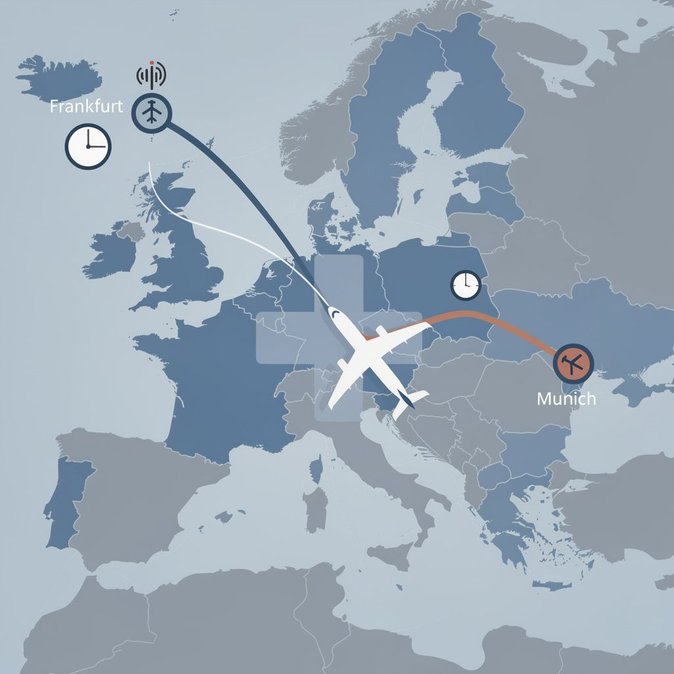
On the evening of 13 October an Aegean Airlines Airbus A320 operating flight A3 532 from Thessaloniki to Frankfurt declared a general emergency (transponder code 7700) and diverted to Munich, landing safely 15 minutes before its scheduled Frankfurt arrival. The carrier later confirmed that a passenger had suffered a serious medical event, necessitating the diversion so that paramedics could meet the aircraft immediately on the ground. The unplanned stop forced the flight crew to refuel and reset duty times, delaying the aircraft’s onward rotation and causing knock-on scheduling changes for Aegean’s nightly wave at Frankfurt. For Germany’s busiest hub, which processes more than 1,300 flight movements a day, even a single medical diversion creates additional stand allocation and ground-handling complexity during the congested evening peak. Fraport AG said the case illustrates why Munich, Stuttgart and Nuremberg maintain “medical hot-standby” positions to absorb diversions that cannot be handled at Frankfurt due to runway or staffing constraints. Since January, Lufthansa and FRA airport authority have run joint tabletop exercises that model various diversion scenarios, including passenger medical events, to keep hub operations resilient. Travel-risk consultants advise companies to remind assignees and frequent flyers that European carriers no longer guarantee onboard doctors and that travellers with chronic conditions should carry English-language medical summaries. Mobility managers should also note that diversions can void rail-and-fly add-ons when the arrival airport changes. While most diversions are weather-related, German authorities log roughly 180 medical emergencies a year—numbers expected to rise as the passenger mix skews older. The incident therefore serves as a prompt for duty-of-care reviews that consider both air and ground medical contingencies.
Source: Tagesschau