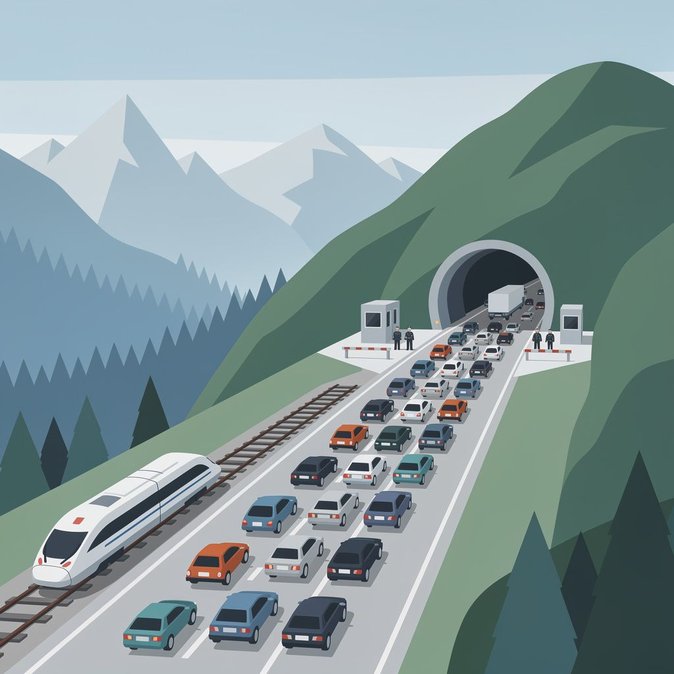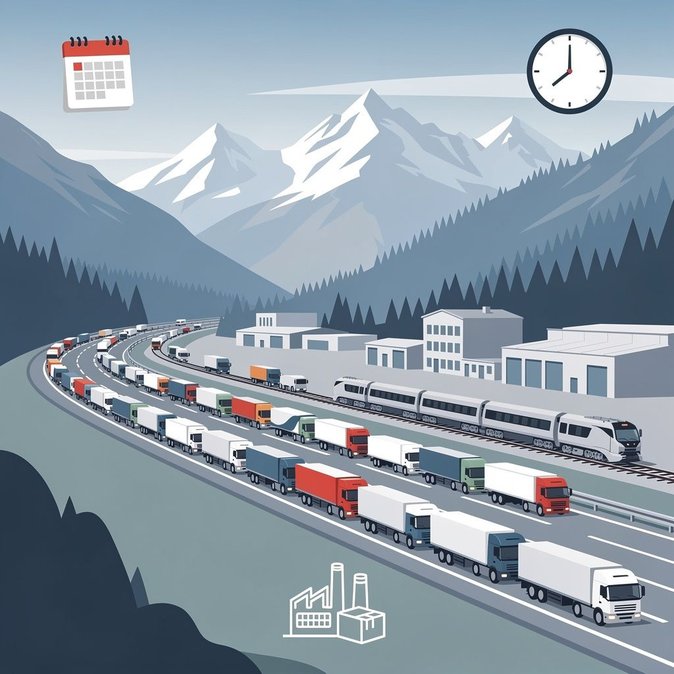
Reisereporter’s live feed shows sustained congestion this morning on the A93 between Germany’s Inntaldreieck and the Austrian border town of Kufstein, extending into the A12 Inntal Autobahn towards Innsbruck. By 06:30 CEST queues had stretched over 15 km, fuelled by a scheduled Tirol ‘Lkw-Blockabfertigung’ that limits truck entries to 300 per hour. The block-release measure, intended to protect Tyrolean valleys from pollution and gridlock, is now a predictable headache for German exporters shipping just-in-time components to plants south of the Alps. Today’s restrictions forced several automotive suppliers to reroute via the Brenner rail freight corridor, incurring overnight premiums. Passenger vehicles were not exempt; commuters headed for meetings in Innsbruck reported delays of up to 90 minutes. Tyrol’s authorities defend the policy as crucial for road safety and note that alternative slots are published months in advance. Nonetheless, logistics associations argue that ad-hoc holiday traffic and weather disruptions often coincide with block-days, compounding delays. Mobility planners are advised to monitor the official Blockabfertigung calendar, encourage shift-based departure times and pre-clear customs at Bavaria’s Kiefersfelden facility to shorten border dwell times. Long-discussed EU mediation has yet to yield a durable solution. Until capacity upgrades on the Brenner Base Tunnel come online later in the decade, the Kufstein choke-point will remain a litmus test for cross-border supply-chain resilience.