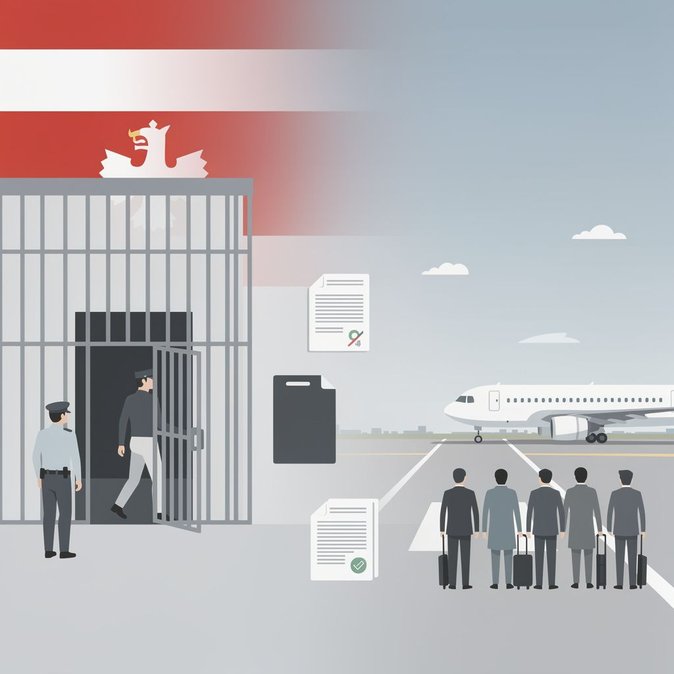
Austria’s Council of Ministers approved a package of asylum-and-deregulation measures on 14 October 2026 aimed at accelerating removals of foreign offenders and lightening administrative burdens on businesses. Interior Minister Gerhard Karner, flanked by State Secretaries Jörg Leichtfried and Sepp Schellhorn, outlined the decisions after the meeting in Parliament. Key immigration measure A new legal mechanism will allow non-citizens convicted of criminal offences to be deported straight from prison once they serve the minimum custodial term, bypassing the current two-step process that requires transfer to immigration detention (Schubhaft). Authorities deported nearly 12,000 people in the first nine months of 2026—about half involuntarily—and expect the reform to raise that figure by at least 10 % next year. Rationale • Prison overcrowding has reached 108 % capacity, with foreign nationals comprising a growing share of inmates. • Direct deportation eliminates redundant custody costs and frees up roughly 80 correctional officers for redeployment, according to the Justice Ministry. • The move aligns with coalition pledges for a “strict but fair” asylum system amid public concern about security. Other mobility-relevant elements The package complements the Skilled-Workers Ordinance by lengthening the “grace period” during company take-overs from three to five years, suspending certain labour-inspectorate checks and thereby easing compliance for firms that inherit foreign-labour sponsorship obligations. Digital deregulation measures will also scrap 5,000 federal reporting requirements, many linked to expat payroll filings. Implications for employers and mobile staff • Companies employing non-EU nationals with criminal convictions—even for lesser offences—should review internal conduct policies; a prison sentence could now trigger near-immediate removal and loss of workforce access. • Immigration advisers expect stricter scrutiny of good-conduct certificates during Red-White-Red Card renewals. • HR teams overseeing mergers or acquisitions will benefit from simpler post-deal compliance, but must still maintain employee register accuracy during the extended grace period. Next steps The draft amendments head to Parliament for a fast-tracked vote, expected before the winter recess. If enacted, the deportation changes could take effect on 1 January 2027, giving businesses a short window to audit at-risk employee populations.