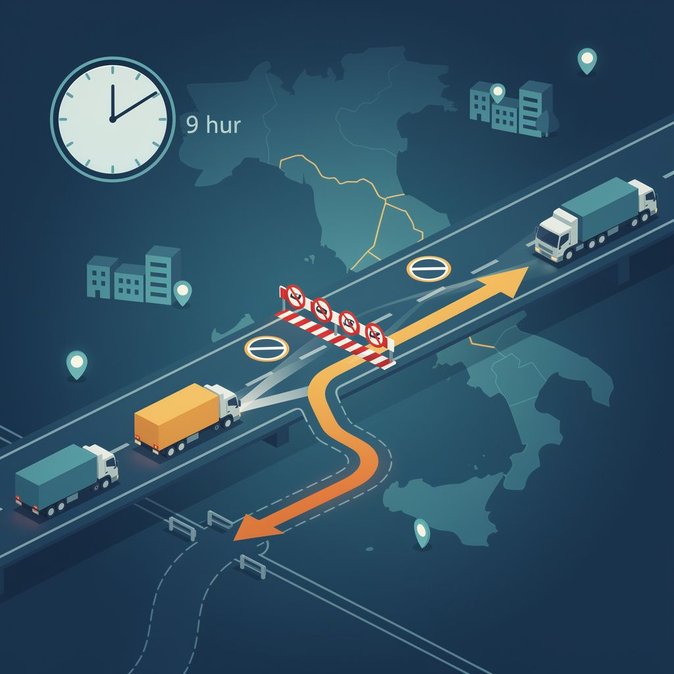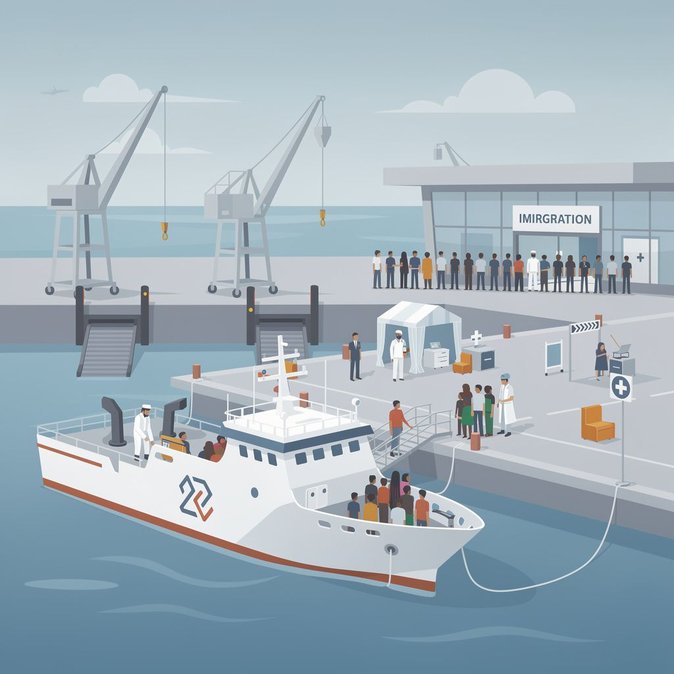
The NGO vessel Humanity 1 berthed in Savona at 17:55 on 19 October carrying 80 survivors of two night-time rescues off the Tunisian coast. The manifest included many unaccompanied minors, a pregnant woman and a two-month-old infant, several suffering fuel burns and chronic conditions. Earlier, Italian authorities had authorised the disembarkation of 32 minors and two medical evacuees in Trapani, but ordered the remaining passengers to sail 670 nautical miles north— a decision the organisation calls ‘politically driven’. On arrival a task-force of the prefecture, police, Guardia di Finanza and Red Cross implemented the ‘mass influx’ protocol: medical triage, fingerprinting and relocation to reception centres in Piedmont and Lombardy. Savona’s immigration police office closed early to process asylum registrations, delaying routine residence-permit appointments until 21 October. Logistically, the docking required temporary closure of quays 7 and 8, forcing the diversion of a Grimaldi ro-ro vessel to Genoa and delaying delivery of automotive parts destined for factories near Turin. Port agents report demurrage costs of up to €12,000 for importers caught off-guard. For mobility stakeholders the case highlights how maritime rescue operations can ripple into commercial supply chains and local administrative services. Foreign seafarers scheduled for crew changes in Savona should check with agents, as accommodation capacity around the port is tight while volunteers host vulnerable passengers. Politically, the episode will feed into Parliament’s debate on a draft law that seeks to fine NGOs for each day spent beyond the ‘nearest safe port’. Businesses employing staff whose work involves maritime checkpoints—surveyors, auditors, engineers—should monitor potential access-badge restrictions if the bill passes.
Source: SavonaNews