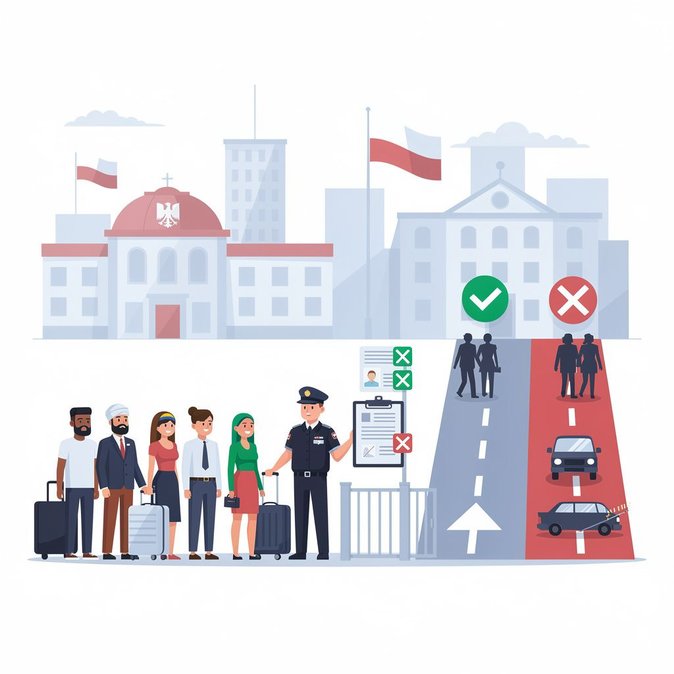
Poland’s Border Guard (Straż Graniczna) has carried out a string of high-profile enforcement actions that highlight the country’s tougher stance on immigration compliance ahead of the year-end travel rush. In operations coordinated by the Carpathian Border Guard Unit, officers detained several non-EU nationals for offences ranging from overstaying and illegal work to travelling on forged documents. Among those removed was a Ukrainian national with 59 previous misdemeanour fines whose public-order behaviour triggered an immediate return order. Two Colombian citizens working in the Świętokrzyskie region without the required work permits were also apprehended; both received 12-month Schengen-wide re-entry bans. In Tarnów, officers intercepted an Indian citizen with a prior criminal conviction, issuing a 30-day departure order and a two-year ban. The most serious case involved an Uzbek national wanted on an Interpol Red Notice for financial fraud; he is now in pre-trial detention pending extradition. A Pakistani citizen found in the same sweep was likewise ordered to leave Poland and barred from re-entry for six months. The stepped-up checks form part of Poland’s wider internal-security strategy, which since 2025 has combined on-the-spot ID inspections with data cross-checks through the national Entry/Exit System. Companies that employ foreigners on assignment are reminded that failure to keep visa and work-permit paperwork in order can attract fines of up to PLN 30,000 per worker, while assignees themselves risk immediate administrative removal. For global mobility managers the message is clear: ensure that assignees carry proof of legal stay at all times, double-check that short-term business visitors are not performing remunerated work, and verify that payroll and social-security registrations match the individual’s authorised status. Employers planning seasonal peaks should factor in longer lead-times for obtaining type-D work visas, as regional labour offices are reporting a 20–25 % surge in applications this quarter.