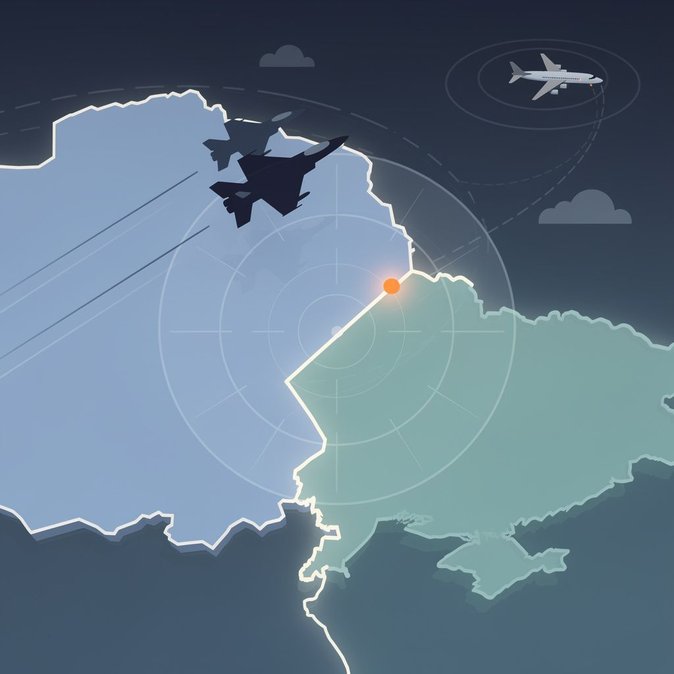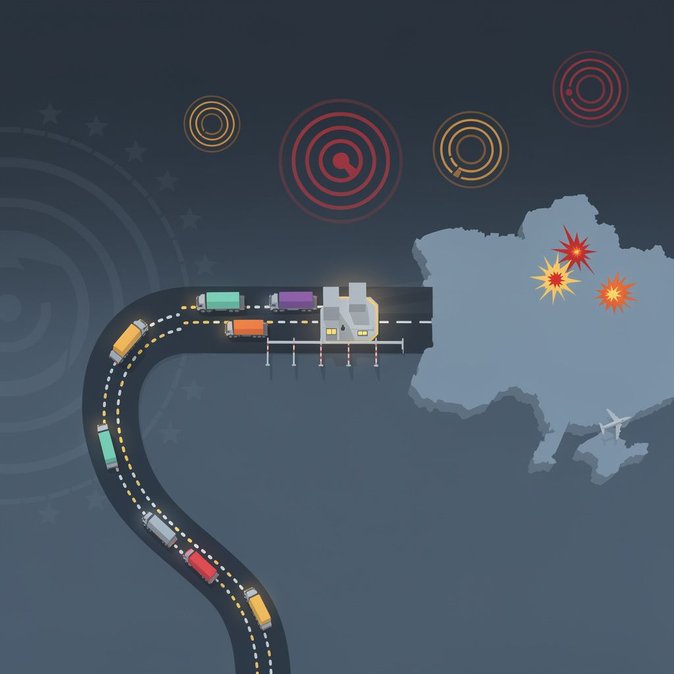
Repeated Russian missile and drone attacks on 16–17 October triggered nine separate air-raid alerts in western Ukraine, forcing border-guard and customs officials on both sides of the Dorohusk–Yahodyn, Hrebenne–Rava-Ruska and Zosin–Ustyluh crossings to halt processing every time sirens sounded. Polish Radio and Ukraine’s national UNN agency report that the cumulative stoppages pushed waiting times for heavy-goods vehicles to 40 hours and created back-ups stretching more than eight kilometres on the Polish approach roads. Although passenger cars and coaches were theoretically allowed to clear during alerts, vehicles could not exit the sterile zone until Ukraine’s State Emergency Service gave the all-clear. Michał Deruś, spokesperson for the Lublin Tax Administration, said the overnight interruptions “paralysed one of the EU’s critical humanitarian and commercial corridors.” Poland is the principal land bridge for Ukrainian exports since Black Sea routes remain in flux; more than 3,000 trucks a day normally transit the three Lublin Voivodeship crossings. Logistics firms moving automotive parts and agri-food products to German clients told media they have rerouted some loads via Slovakia, adding 250 km to each journey and raising costs by 15–20 %. Freight forwarder Pol-Sped estimates demurrage and driver-overtime expenses at €1 m per day while the disruption lasts. For multinational supply-chain managers, the episode underscores the fragility of just-in-time deliveries through war-adjacent corridors. Experts recommend building 48-hour inventory buffers at Polish consolidation hubs and pre-clearing customs documents to exploit the brief windows when traffic moves.