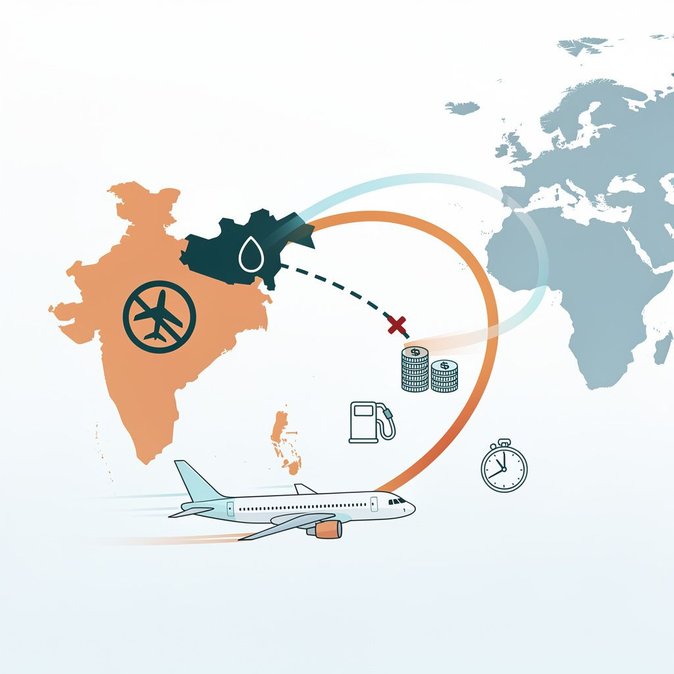
Pakistan’s Civil Aviation Authority has issued a fresh Notice to Airmen (NOTAM) extending the closure of both Lahore and Karachi Flight Information Regions to “all Indian-registered aircraft and aircraft owned, leased or operated by Indian entities” until 04:59 a.m. local time on 24 November 2026. The previous extension was due to lapse on 24 October, meaning Indian airlines now face at least another month of forced detours. The ban, instituted amid a sharp India–Pakistan escalation in April 2025, has already added up to three hours’ block time on some Europe-bound Air India routes, pushing fuel costs up by almost 30 percent according to figures the carrier shared with Indian officials last year. With long-haul profitability already wafer-thin, Tata-group airlines estimate the closure could erode annual pre-tax earnings by roughly US$455 million if sustained. Operational work-arounds involve routing via the Arabian Sea and the Gulf, or hugging air corridors over central Asia—choices that create complex air-traffic-flow restrictions and expose flights to Middle-East volatility. The extra flying time also chips away at crew-duty limits, forcing schedule padding or night-stop rotations that ripple through aircraft utilisation plans. From a global-mobility perspective, corporate travel managers should budget for higher fares and longer journey times on Europe and US sectors operated by Indian carriers, and build additional connection buffers for onward travel. Airfreight customers likewise face capacity squeezes as airlines prioritise belly-hold space on lengthened sectors. While foreign airlines can still overfly Pakistan, their fares have also inched up as demand shifts. Diplomatically, the extension underscores how geopolitical flashpoints can morph into long-term structural barriers to mobility. Industry bodies in both countries have urged New Delhi and Islamabad to carve out an “essential aviation corridor”, but prospects remain bleak in the absence of a broader détente. Should the closure persist into peak-season traffic, travellers may increasingly favour Gulf and Southeast-Asian hubs, eroding India’s ambitions to become a major international transit node.
Source: The Star (Malaysia)