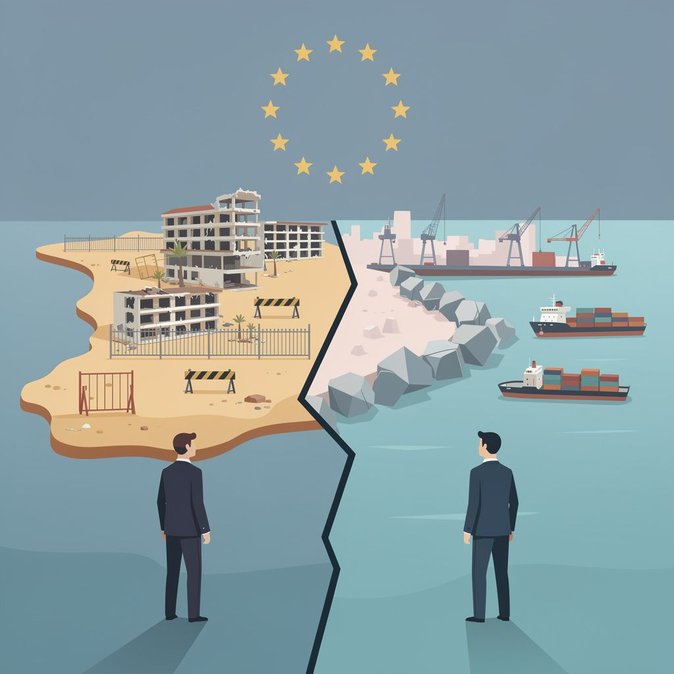
In a televised interview on 21 October 2026, Turkish-Cypriot leader Tufan Erhurman publicly refused President Christodoulides’ proposal to place the fenced-off resort of Varosha under temporary UN administration in exchange for opening Famagusta port to direct EU-supervised trade. Erhurman argued the package offered no meaningful access to EU markets for the north, noting that the EU’s Direct Trade Regulation would remain in limbo even if the port operated under UN or EU oversight. “Why trade Varosha for something that doesn’t lift our commercial isolation?” he asked, calling the idea a recycled version of a 2006 plan rejected by both communities. The rejection dampens hopes for early confidence-building measures that could unlock people-to-people mobility. Varosha’s opening would have allowed displaced Greek-Cypriot property owners to visit and potentially resettle, while an EU-linked Famagusta port could have legalised ferry and cargo services, easing the north’s dependence on Turkish ports and airlines. For businesses, the continued deadlock means existing restrictions remain: vessels calling northern ports are still barred from EU ports under Republic of Cyprus control, and Varosha stays off-limits save for limited UN patrols. Multinationals eying a unified Cyprus market must therefore continue operating separate northern and southern legal entities. Diplomatic observers say the setback reinforces the need for incremental gains—such as additional Green Line crossings—before more ambitious mobility schemes can gain traction.
Source: KNEWS