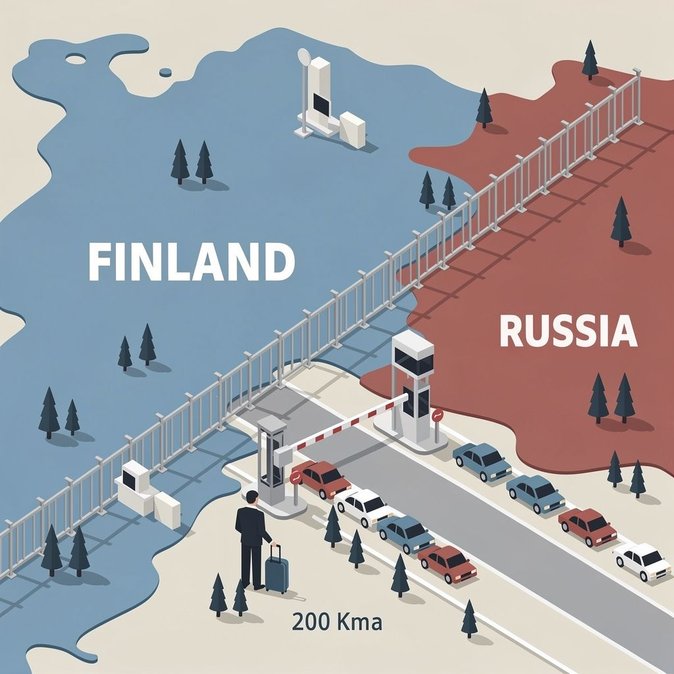
The EU Agency for Fundamental Rights (FRA) released its third quarterly Migration and Fundamental Rights Bulletin on 22 October, spotlighting Finland’s proposal of 3 September to prolong the controversial Border Security Act until 31 December 2028. The Act allows the government, by separate decision, to suspend the lodging of asylum applications in parts of the country during hybrid-migration incidents—a power invoked in late 2023 to close Finland’s entire eastern land border with Russia. FRA’s report acknowledges Helsinki’s security concerns but warns that any extension must be accompanied by robust safeguards to uphold the right to seek asylum and the principle of non-refoulement. The bulletin also records the Finnish Border Guard’s announcement that a 200-kilometre, 4.5-metre-high fence along key sections of the Russian frontier is now structurally complete, with sensor integration ongoing. Brussels-based NGOs argue the fence risks diverting asylum seekers into more dangerous routes. For employers, the immediate impact is continuity: the eastern land border, closed to passenger traffic since December 2023, will almost certainly remain shut for the foreseeable future. Staff rotations between Finland and Russia must therefore continue to rely on limited freight rail via Vainikkala or indirect air routes. Companies should also review crisis-management plans in case sudden government decisions again restrict where asylum claims can be made, affecting employees’ accompanying family members. The FRA bulletin arrives as EU institutions negotiate the final pieces of the Pact on Migration and Asylum, making Finland’s approach a potential test case for how member states balance border securitisation with fundamental-rights obligations. Mobility practitioners should track whether extended powers influence processing times at other borders or trigger reciprocal measures by neighbouring states.
Source: EU Agency for Fundamental Rights