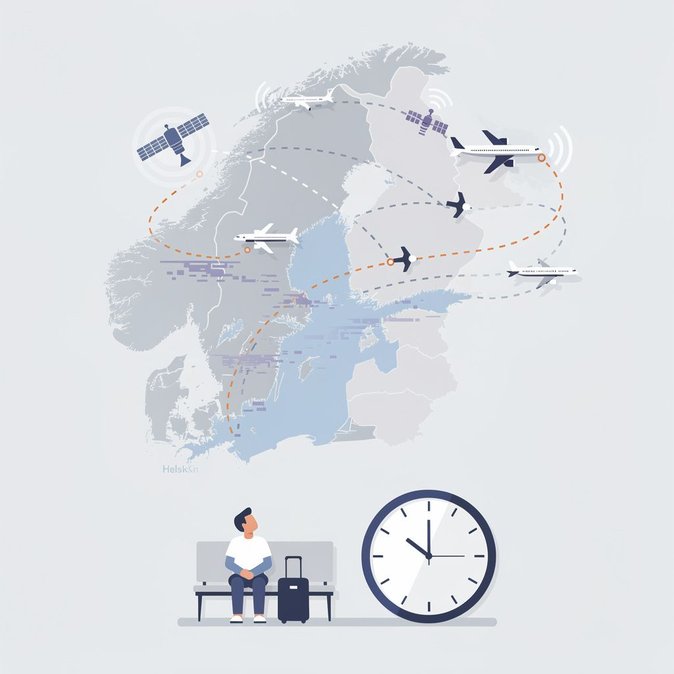
Finland’s Air Navigation Services issued a NOTAM late on 21 October warning that Global Navigation Satellite System (GNSS) interference can be expected throughout the Helsinki Flight Information Region (FIR). The alert (B1949/26) remains in effect until 8 November and covers both IFR and VFR operations, including approaches into Helsinki-Vantaa, Turku and Tampere airports. The interference—believed to stem from jamming activity originating outside Finland’s borders—has been sporadic but severe enough to trigger repeated loss-of-signal events on aircraft GPS receivers. Finnair told Global Mobility News that flight crews are reverting to inertial navigation and traditional radio-beacon procedures when necessary and that “passenger safety is not compromised, but minor delays are possible when alternate procedures are in use.” While long-haul schedules remain intact, the situation could disrupt business travellers on tight intra-European connections. Pilots must request conventional navigational aids, which can lengthen approach sequences, particularly in winter weather. Corporate travel teams should monitor connection buffers for Helsinki-based itineraries and be prepared for last-minute gate changes if arrival slots are resequenced. Finland’s Transport and Communications Agency (Traficom) recommends that airlines operating into the FIR carry out pre-flight risk assessments and ensure crews are current on non-GNSS procedures. Travellers carrying personal GNSS-dependent devices—including e-SIM travel routers—may notice intermittent outages as well. The Border Guard has increased radar surveillance to rule out any link between the interference and recent unmanned-aerial-vehicle sightings over the Gulf of Finland. Mobility managers with assignees in Finnish Lapland should pay particular attention: aircraft serving Ivalo and Rovaniemi rely heavily on GNSS-based RNP approaches. If interference persists, diversion to Oulu or Kuusamo airports may be required, adding several hours of ground transfer time. Companies should refresh duty-of-care communications and ensure hotel contingencies are in place for delayed arrivals.